

Hey there! As a supplier of concrete plants, I've gotten tons of questions about the different components in these plants. One part that often sparks curiosity is the mixer. So, today, I'm gonna break down what the function of a mixer in a concrete plant really is.

Let's start with the basics. A concrete plant is a facility where all the ingredients for concrete - cement, water, aggregates (like sand and gravel), and sometimes additives - are combined to create the final product. And the mixer is the heart of this operation. It's like the kitchen blender for concrete, but on a much larger and more industrial scale.
The primary function of a mixer in a concrete plant is to blend all the ingredients thoroughly. You can't just throw cement, water, and aggregates together and expect high - quality concrete. The mixer ensures that every single particle of cement gets coated with water and is evenly distributed among the aggregates. This uniform distribution is crucial because it directly affects the strength, durability, and workability of the concrete.
When the mixer starts its job, it first takes in the aggregates. These are usually loaded into the mixer using conveyors or skip hoists. Once the aggregates are in, the cement is added. Cement is the binding agent in concrete, and it needs to be mixed well with the aggregates. If the cement isn't evenly distributed, you'll end up with weak spots in the concrete where there isn't enough binding material.
After the cement, water is added. Water is what activates the cement and starts the chemical reaction known as hydration. This reaction causes the concrete to harden over time. The mixer keeps churning the mixture, allowing the water to penetrate every part of the cement - aggregate combination. This is important because if the hydration process doesn't happen uniformly, the concrete won't set properly, and its strength will be compromised.
Some concrete mixes also require additives. These can be things like plasticizers to improve workability, accelerators to speed up the setting time, or retarders to slow it down. The mixer also has to incorporate these additives evenly into the mix. Just like with the other ingredients, a good mix ensures that the additives work as intended throughout the entire batch of concrete.
There are different types of mixers used in concrete plants, and each has its own way of performing these functions. One common type is the twin - shaft mixer. This mixer has two parallel shafts with blades attached. As the shafts rotate in opposite directions, the blades move the material back and forth, creating a very intense mixing action. This type of mixer is great for producing high - quality concrete quickly, as it can achieve a homogeneous mix in a relatively short time.
Another type is the planetary mixer. In a planetary mixer, the mixing blades not only rotate around their own axes but also revolve around the center of the mixing pan. This complex motion ensures that the material is mixed from all angles, resulting in a well - blended mix. Planetary mixers are often used for small - to medium - sized concrete batches and are known for their ability to handle different types of aggregates and mixes.
Now, let's talk about how the mixer fits into the bigger picture of a concrete plant. The mixer is usually connected to other components of the plant, such as the storage silos for cement and aggregates, the weighing systems, and the control panel. The weighing systems ensure that the right amount of each ingredient is added to the mixer. This is crucial because even a small deviation in the quantity of an ingredient can affect the quality of the concrete.
The control panel allows the operators to monitor and control the mixing process. They can set the mixing time, the speed of the mixer, and the sequence in which the ingredients are added. This level of control ensures that each batch of concrete meets the specific requirements of the project.
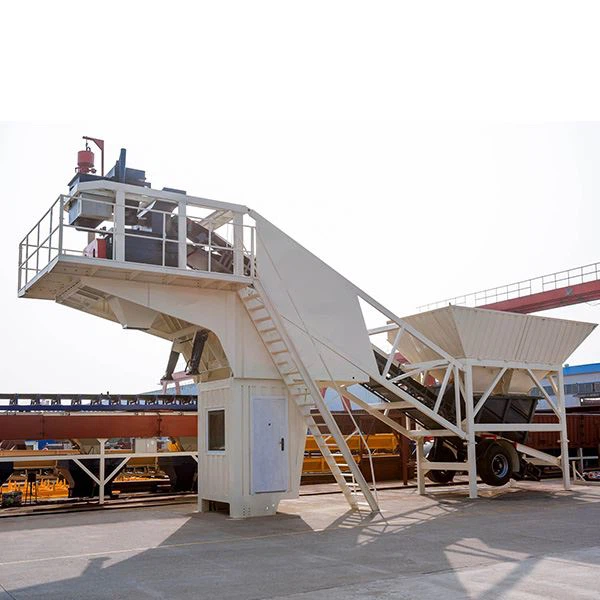
As a concrete plant supplier, we offer a range of concrete plants that come with different types of mixers to suit various needs. For those who need a more compact and mobile solution, we have the Mini Portable Concrete Batch Plant. This plant is great for small construction sites or projects where space is limited. It's easy to transport and set up, and it comes with a mixer that can produce high - quality concrete in small batches.
If you need a bit more capacity and flexibility, our Portable Concrete Mixing Plant might be the right choice. This plant is still portable but can handle larger batches of concrete. The mixer in this plant is designed to be efficient and reliable, ensuring consistent quality in every batch.

For those who want a truly mobile solution that can be quickly moved from one site to another, we have the Mini mobile concrete batching mixing plant. This plant is ideal for contractors who work on multiple sites and need a concrete - producing solution that can keep up with their projects.
In conclusion, the mixer in a concrete plant is an essential component that plays a vital role in producing high - quality concrete. It blends all the ingredients together to create a homogeneous mix, which is the foundation of strong and durable concrete structures. Whether you're working on a small DIY project or a large - scale construction job, having the right mixer in your concrete plant is crucial.
If you're in the market for a concrete plant and want to learn more about the mixers we offer, don't hesitate to get in touch. We're here to help you find the perfect solution for your concrete - production needs. Whether you have questions about the types of mixers, the capacity of our plants, or the installation process, we're just a message or a call away. Let's start a conversation and see how we can work together to make your concrete projects a success.
References
- ACI Manual of Concrete Practice. American Concrete Institute.
- Neville, A. M. (1995). Properties of Concrete. Pearson Education.


