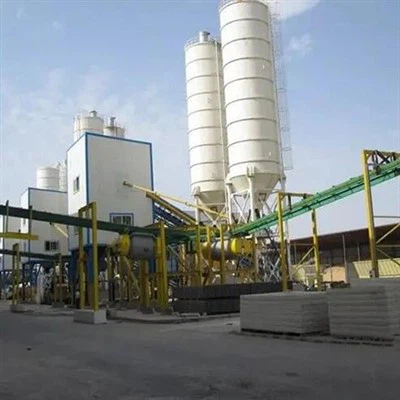
As a supplier of Dry Batching Plants, I've witnessed firsthand the critical role that raw material quality plays in the overall performance and output of these facilities. In this blog post, I'll delve into the various impacts of raw material quality on a dry batching plant, exploring both the positive and negative effects and why it's essential to pay close attention to this aspect of the production process.
Quality and Consistency of the Final Product
One of the most significant impacts of raw material quality on a dry batching plant is the quality and consistency of the final product. High - quality raw materials, such as well - graded aggregates, pure cement, and properly selected additives, contribute to a more uniform and reliable concrete mix. When aggregates have a consistent particle size distribution, they pack together more efficiently, resulting in a denser and stronger concrete structure.
For example, if the aggregates used in the dry batching plant have a large amount of fine particles or an uneven size distribution, it can lead to a concrete mix that is either too stiff or too workable. This inconsistency can cause problems during construction, such as difficulty in placing and finishing the concrete, and can also affect the long - term durability of the structure.

On the other hand, using high - quality cement with the right chemical composition ensures proper hydration and strength development. A cement with a high content of tricalcium silicate (C3S) will generally gain strength more rapidly, which is beneficial for projects with tight schedules. The use of high - quality additives, like water - reducing agents or air - entraining agents, can further enhance the performance of the concrete, improving its workability, durability, and resistance to environmental factors.
Production Efficiency
Raw material quality also has a direct impact on the production efficiency of a dry batching plant. High - quality raw materials are easier to handle and process. For instance, clean aggregates with low moisture content and minimal impurities require less energy for drying and screening. This reduces the overall energy consumption of the plant and can lead to significant cost savings over time.
In contrast, poor - quality raw materials can cause numerous issues in the production process. Aggregates with high moisture content can clog the conveyor belts and hoppers, leading to production delays and increased maintenance requirements. Impurities in the raw materials, such as clay or organic matter, can also interfere with the chemical reactions in the concrete mix, reducing its strength and durability. These problems can result in increased downtime for the plant, as well as higher costs associated with cleaning and maintenance.
Equipment Wear and Tear
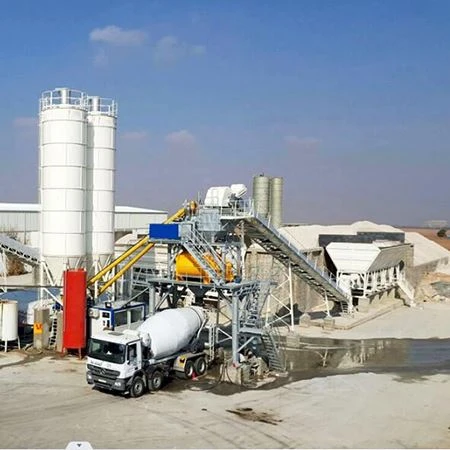
The quality of raw materials can significantly affect the wear and tear of the equipment in a dry batching plant. Abrasive raw materials, such as hard - rock aggregates, can cause rapid wear on the crushers, screens, and conveyor belts. This not only shortens the lifespan of the equipment but also increases the frequency of maintenance and replacement.
On the other hand, using high - quality, less abrasive raw materials can extend the life of the equipment. For example, limestone aggregates are generally less abrasive than granite aggregates, which means that the equipment used to process limestone will experience less wear and tear. By reducing equipment wear, the dry batching plant can operate more efficiently and cost - effectively, with fewer interruptions due to equipment failures.
Environmental Impact
Raw material quality can also have an environmental impact. High - quality raw materials that are sourced responsibly can reduce the environmental footprint of the dry batching plant. For example, using recycled aggregates in the concrete mix can help conserve natural resources and reduce the amount of waste sent to landfills.
However, poor - quality raw materials may require more energy - intensive processing methods to achieve the desired quality. For instance, if the aggregates have a high clay content, additional washing and screening may be required, which consumes more water and energy. Additionally, the use of low - quality cement that requires a higher dosage to achieve the same strength can result in increased carbon dioxide emissions during the cement production process.
Cost Considerations
While high - quality raw materials may initially seem more expensive, they can actually lead to cost savings in the long run. As mentioned earlier, high - quality raw materials can improve production efficiency, reduce equipment wear and tear, and result in a higher - quality final product. This can lead to fewer callbacks and warranty claims, as well as a better reputation for the dry batching plant.
On the other hand, using low - quality raw materials may seem like a cost - saving measure in the short term, but it can lead to increased costs in the long run. The additional energy consumption, maintenance requirements, and potential product failures can quickly offset any initial savings.
Importance of Quality Control
To ensure that the raw materials used in a dry batching plant meet the required standards, it's essential to implement a comprehensive quality control program. This program should include regular testing of the raw materials for properties such as particle size distribution, moisture content, chemical composition, and strength.
By monitoring the quality of the raw materials at every stage of the production process, the dry batching plant can identify and address any issues before they affect the final product. This can help maintain the consistency and quality of the concrete mix, as well as improve the overall efficiency of the plant.
Conclusion
In conclusion, the quality of raw materials has a profound impact on a dry batching plant. It affects the quality and consistency of the final product, production efficiency, equipment wear and tear, environmental impact, and cost. As a supplier of Ready Mix Batch Plant, Wet Mix Batching Plant, and Concrete Batch Plant Equipment, I understand the importance of using high - quality raw materials in these facilities.

If you're in the market for a dry batching plant or need advice on improving the quality of your concrete production, I encourage you to reach out for a detailed discussion. We can work together to ensure that you're using the best raw materials and equipment to achieve the highest - quality results.
References
- Neville, A. M. (2011). Properties of Concrete. Pearson Education.
- Mehta, P. K., & Monteiro, P. J. M. (2014). Concrete: Microstructure, Properties, and Materials. McGraw - Hill Education.
- ACI Committee 211. (2014). Standard Practice for Selecting Proportions for Normal, Heavyweight, and Mass Concrete. American Concrete Institute.