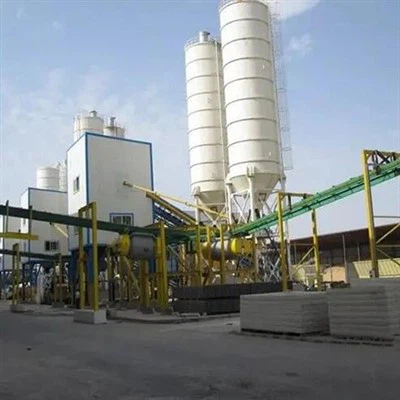
Hey there! As a supplier for a Ready Mix Cement Plant, I've seen firsthand how crucial supply chain management is in this industry. Let's dive into the key aspects that keep a ready mix cement plant running smoothly.
Raw Material Sourcing
The first step in the supply chain of a ready mix cement plant is sourcing raw materials. Cement, aggregates (like sand and gravel), water, and additives are the main ingredients. We need to find reliable suppliers for each of these. For cement, we look for manufacturers with a good reputation for quality and consistency. Aggregates are sourced from local quarries whenever possible. This not only reduces transportation costs but also ensures a steady supply. Water is usually sourced from nearby water bodies or municipal supplies. And additives, which can improve the performance of the concrete, are bought from specialized chemical suppliers.
It's important to have multiple suppliers for each raw material. This way, if one supplier has an issue, like a production delay or quality problem, we can quickly switch to another. We also need to keep an eye on market prices and availability. For example, during construction boom seasons, the demand for aggregates might increase, leading to shortages and price hikes. By having long - term contracts with some suppliers and keeping an eye on the market, we can better manage these situations.
Inventory Management
Once we've sourced the raw materials, we need to manage our inventory properly. Over - stocking can tie up a lot of capital and lead to waste, especially for materials like cement which can lose its quality over time if not stored correctly. On the other hand, under - stocking can cause production delays.
We use inventory management software to keep track of stock levels. This software can generate reports on inventory turnover, reorder points, and safety stocks. For example, we set a reorder point for cement. When the stock level reaches this point, we automatically place an order with the supplier. Safety stocks are also maintained to account for unexpected increases in demand or supply disruptions.
We also need to ensure proper storage conditions for our inventory. Cement should be stored in dry silos to prevent it from hardening. Aggregates need to be stored in covered areas to keep them clean and free from contaminants.
Production Planning
Production planning is a critical part of supply chain management in a ready mix cement plant. We need to balance the demand for ready - mix concrete with our production capacity. This involves forecasting the demand based on historical data, market trends, and customer orders.
For example, if we know that a large construction project is starting in the area next month, we can plan our production accordingly. We need to ensure that we have enough raw materials in stock and that our production equipment is in good working condition.
We also need to schedule the production runs efficiently. Different types of ready - mix concrete have different production requirements. Some might require more additives or a longer mixing time. By scheduling the production runs based on these requirements, we can improve the overall efficiency of the plant.


Transportation and Delivery
Once the ready - mix concrete is produced, it needs to be transported to the construction sites in a timely manner. Concrete has a limited setting time, so it's crucial to deliver it before it starts to harden.
We have a fleet of trucks dedicated to transporting the ready - mix concrete. The trucks are equipped with rotating drums to keep the concrete in a homogeneous state during transportation. We use GPS tracking systems to monitor the location of the trucks and estimate the delivery times.
Route planning is also important. We need to choose the shortest and least congested routes to the construction sites. This not only reduces the delivery time but also saves on fuel costs. In some cases, we might need to coordinate with the construction site managers to ensure that there is enough space for the trucks to unload the concrete.
Quality Control
Quality control is an integral part of the supply chain management in a ready mix cement plant. We need to ensure that the ready - mix concrete meets the required standards. This involves testing the raw materials before they are used in production and testing the final product before it is delivered.
For raw materials, we test the cement for its strength, fineness, and setting time. Aggregates are tested for their particle size distribution, shape, and impurity content. Water is tested for its chemical composition.
Once the ready - mix concrete is produced, we test it for its slump (a measure of its workability), compressive strength, and air content. Only when the concrete passes these tests can it be delivered to the construction sites.
Supplier Relationships
Building and maintaining good relationships with our suppliers is essential. We work closely with them to ensure a steady supply of high - quality raw materials. We communicate regularly with our suppliers to discuss any issues or changes in demand.
For example, if we are planning to increase our production in the next quarter, we can inform our suppliers in advance so that they can plan their production accordingly. We also offer feedback to our suppliers on the quality of their products. This helps them to improve their processes and deliver better products.
In addition, we can negotiate better terms with our suppliers, such as discounts for large orders or longer payment terms. By having strong supplier relationships, we can reduce the risks in the supply chain and improve the overall efficiency of the plant.
Technology and Innovation
In today's digital age, technology plays a big role in supply chain management. We use advanced software for inventory management, production planning, and quality control. For example, some software can analyze the data from the production process to identify areas for improvement.
We are also looking into new technologies for transportation. Electric trucks are becoming more popular in the industry as they are more environmentally friendly and can reduce the operating costs in the long run.
In addition, we are exploring the use of new additives and materials that can improve the performance of the ready - mix concrete. For example, some new additives can reduce the water content in the concrete, leading to stronger and more durable structures.
If you're in the market for a ready - mix cement plant, you might be interested in our Batching Plant Ready Mix, Compact Concrete Plant, or Portable Ready Mix Plant. These plants are designed to be efficient, reliable, and easy to operate.
If you have any questions or are interested in purchasing our products, feel free to reach out for a procurement discussion. We'd be happy to talk to you about how we can meet your specific needs.
References
- "Supply Chain Management in the Construction Industry" by various authors
- "Concrete Technology: Theory and Practice" by a well - known concrete expert
- Industry reports on ready - mix concrete production and supply chain management