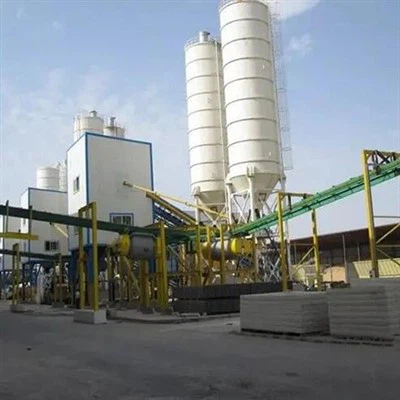
In the construction industry, a Mixer Batching Plant plays a crucial role in producing high - quality concrete. As a supplier of Mixer Batching Plants, I have witnessed firsthand how the mixing principle significantly impacts the mixing quality of these plants. In this blog, I will delve into the details of how different mixing principles affect the overall quality of the concrete produced by Mixer Batching Plants.
1. Understanding the Basics of Mixer Batching Plants
A Mixer Batching Plant is a facility that combines various ingredients such as cement, aggregates, water, and additives in specific proportions to produce concrete. The quality of the concrete depends on how well these ingredients are mixed. There are different types of Mixer Batching Plants available in the market, including Ready Mix Batch Plant, New Ready Mix Plants, and Portable Concrete Plant. Each type has its own unique features and is designed to meet different construction requirements.
2. Different Mixing Principles
2.1 Gravity Mixing
Gravity mixing is one of the simplest and oldest mixing principles. In this method, the ingredients are placed in a container, and the mixing occurs as the materials fall under the influence of gravity. The container may be rotated or agitated to enhance the mixing process. Gravity mixing is relatively inexpensive and easy to operate. However, it has some limitations. The mixing efficiency is often low, especially when dealing with large - scale production. The ingredients may not be evenly distributed, leading to inconsistent concrete quality. For example, heavier aggregates may settle at the bottom, while lighter materials may remain on the top. This can result in concrete with varying strength and workability throughout the batch.
2.2 Forced Mixing
Forced mixing, on the other hand, is a more advanced and efficient mixing principle. In a forced - action mixer, the mixing blades or paddles are designed to actively move the ingredients in different directions. This creates a high - intensity mixing environment where the ingredients are thoroughly blended. Forced mixing can achieve a more uniform distribution of the materials, resulting in better - quality concrete. The high - speed rotation of the mixing blades breaks down any clumps of cement or aggregates, ensuring that all the particles are in contact with each other and with the water. This leads to a more complete hydration process, which is essential for the development of the concrete's strength.
2.3 Planetary Mixing
Planetary mixing is a specialized form of forced mixing. In a planetary mixer, the mixing blades not only rotate around their own axis but also revolve around the center of the mixing drum. This complex motion creates a three - dimensional mixing pattern, which is extremely effective in achieving a homogeneous mixture. Planetary mixers are particularly suitable for mixing high - performance concrete, where a very high level of uniformity is required. They can handle a wide range of materials, including fine powders and large aggregates, and can produce concrete with excellent workability and strength.
3. Impact of Mixing Principles on Mixing Quality
3.1 Homogeneity
The homogeneity of the concrete mixture is a key indicator of mixing quality. A well - mixed concrete should have a uniform distribution of all the ingredients throughout the batch. Forced mixing and planetary mixing principles are better at achieving homogeneity compared to gravity mixing. In a forced - action or planetary mixer, the continuous movement of the mixing blades ensures that all the particles are constantly being re - arranged and mixed. This reduces the chances of segregation, where the ingredients separate from each other. In contrast, gravity mixing may result in areas of concentrated aggregates or cement, leading to an uneven mixture.
3.2 Workability
Workability refers to the ease with which the concrete can be placed, compacted, and finished. The mixing principle can have a significant impact on the workability of the concrete. Forced mixing and planetary mixing can produce concrete with better workability because they ensure a more thorough dispersion of the water and additives. This allows the concrete to flow more easily and fill the formwork without leaving any voids. In gravity - mixed concrete, the uneven distribution of the ingredients may cause the concrete to be either too dry or too wet in some areas, affecting its workability.


3.3 Strength
The strength of the concrete is directly related to the quality of the mixing. A well - mixed concrete will have a more complete hydration process, which is essential for the development of strength. Forced mixing and planetary mixing principles promote better hydration by ensuring that all the cement particles are in contact with water. This leads to the formation of a dense and strong concrete structure. In gravity - mixed concrete, the incomplete mixing may result in some cement particles not being fully hydrated, which can reduce the overall strength of the concrete.
4. Factors Affecting the Application of Mixing Principles
4.1 Batch Size
The batch size is an important factor to consider when choosing a mixing principle. For small - scale production, gravity mixing may be sufficient, as the low mixing efficiency may not have a significant impact on the overall quality. However, for large - scale construction projects, forced mixing or planetary mixing is usually preferred. These methods can handle larger volumes of materials and ensure consistent mixing quality across the entire batch.
4.2 Type of Ingredients
The type of ingredients used in the concrete also affects the choice of mixing principle. If the concrete contains large or heavy aggregates, a more powerful mixing method such as forced mixing or planetary mixing may be required to ensure proper dispersion. Similarly, if the concrete includes special additives or fine powders, a high - intensity mixing process is needed to ensure that these materials are evenly distributed.
4.3 Construction Requirements
The specific construction requirements, such as the required strength, workability, and durability of the concrete, also play a role in determining the appropriate mixing principle. For high - performance concrete applications, where strict quality standards must be met, planetary mixing is often the best choice. On the other hand, for less demanding projects, gravity mixing or simple forced mixing may be sufficient.
5. Our Role as a Mixer Batching Plant Supplier
As a supplier of Mixer Batching Plants, we understand the importance of choosing the right mixing principle for our customers. We offer a wide range of Mixer Batching Plants, each designed with different mixing principles to meet various construction needs. Our Ready Mix Batch Plant is suitable for large - scale construction projects, where high - quality and consistent concrete production is required. The forced - action mixing system in our ready - mix plants ensures thorough mixing and excellent concrete quality.
Our New Ready Mix Plants are equipped with the latest technology and innovative mixing designs. They are designed to be more energy - efficient and user - friendly, while still delivering top - notch mixing performance. The planetary mixing option in some of our new plants provides an even higher level of mixing quality, making them ideal for high - end construction projects.
For customers who need a more flexible solution, our Portable Concrete Plant is a great choice. These plants can be easily transported to different construction sites and are available with different mixing principles. Whether it is gravity mixing for small - scale jobs or forced mixing for larger projects, our portable plants can be customized to meet the specific requirements.
6. Conclusion and Call to Action
In conclusion, the mixing principle has a profound impact on the mixing quality of a Mixer Batching Plant. Choosing the right mixing principle is crucial for ensuring the production of high - quality concrete. As a leading supplier of Mixer Batching Plants, we are committed to providing our customers with the best - in - class products and solutions. If you are in the market for a Mixer Batching Plant or need more information about our products, please do not hesitate to contact us. We are here to help you select the most suitable mixing principle and plant for your construction project.
References
- Neville, A. M. (1995). Properties of Concrete. Pearson Education.
- ACI Committee 211. (2014). Standard Practice for Selecting Proportions for Normal, Heavyweight, and Mass Concrete. American Concrete Institute.