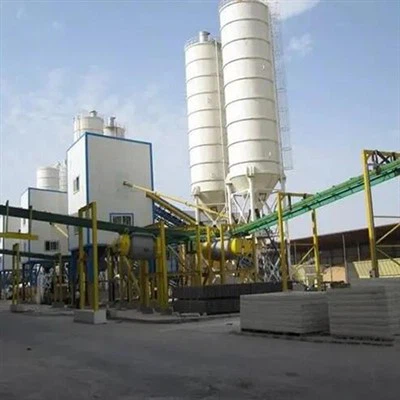
Hey there! I'm a supplier for a Ready Mix Cement Plant, and today I wanna chat about the research and development (R&D) activities that go on in these plants. It's super important stuff, and it can really make a difference in the quality and efficiency of the products we offer.
1. Raw Material Research
First off, let's talk about raw materials. In a ready - mix cement plant, we're constantly looking for the best sources of raw materials. We need things like limestone, clay, iron ore, and gypsum. R&D teams are out there scouting different mines and quarries to find high - quality materials.
They analyze the chemical composition of these raw materials. You see, the right balance of elements in the raw materials is crucial for making good cement. For example, the amount of calcium oxide in limestone can affect the strength and setting time of the cement. The R&D folks use advanced analytical tools like X - ray fluorescence (XRF) spectrometers to figure out the exact composition.
We also research ways to use alternative raw materials. There's a growing trend towards sustainability, and using things like fly ash, slag, or recycled concrete can reduce our environmental impact. These alternative materials can also sometimes improve the properties of the cement. For instance, fly ash can enhance the workability of the concrete and reduce heat generation during the curing process. You can check out more about different types of plants on our Small Concrete Mixing Plant page.
2. Process Optimization
Another big part of R&D in a ready - mix cement plant is process optimization. We're always trying to make the manufacturing process more efficient. One area of focus is the grinding process. Cement clinker needs to be ground into a fine powder, and the fineness of the powder affects the performance of the cement.
R&D teams experiment with different grinding techniques and equipment. They might try out new types of mills or adjust the operating parameters of existing mills. For example, changing the speed of the mill or the size of the grinding media can have a big impact on the fineness and energy consumption.
We also look at the mixing process. In a ready - mix plant, we need to mix the cement, aggregates (like sand and gravel), water, and additives thoroughly. The R&D department tests different mixing algorithms and equipment designs. They want to ensure that the concrete is homogeneous, which means that all the components are evenly distributed. This is important for the strength and durability of the final product. You can learn more about dry mixing processes on our Dry batch concrete plant page.
3. Product Development
Product development is a key R&D activity. We're always looking to create new types of ready - mix cement products to meet the changing needs of our customers. For example, we might develop high - strength concrete for use in tall buildings or bridges. This involves adding special additives and adjusting the mix design.
We also work on developing concrete with specific properties, like self - compacting concrete. Self - compacting concrete can flow and fill formwork without the need for vibration, which can save time and labor on construction sites. The R&D team experiments with different types and amounts of superplasticizers and other additives to achieve the right flowability and stability.
Another area of product development is the creation of environmentally friendly concrete. We're trying to reduce the carbon footprint of our products by using less cement and more alternative materials. This not only helps the environment but also meets the growing demand from customers who are looking for sustainable building solutions. Check out our Batching Plant Wet Mix page for more on wet - mixing processes related to these products.
4. Quality Control and Testing
R&D also plays a crucial role in quality control and testing. We need to ensure that every batch of ready - mix cement meets the required standards. The R&D team develops and improves testing methods.
They test the fresh concrete for properties like slump (which measures the consistency of the concrete), air content, and temperature. These properties can affect the workability and placement of the concrete on the construction site.
For hardened concrete, we test for strength, durability, and shrinkage. We use techniques like compression testing to measure the strength of the concrete cubes after a certain curing period. The R&D department is always looking for more accurate and efficient testing methods. They also work on developing quality control systems that can detect any potential issues early in the production process.
5. Equipment Innovation
In a ready - mix cement plant, the equipment is constantly evolving. R&D teams are involved in developing new and improved equipment. For example, they might work on creating more energy - efficient conveyors to move the raw materials and finished products around the plant.
We're also looking at ways to automate the plant operations. Automation can improve the accuracy of the mixing process, reduce human error, and increase productivity. The R&D department designs and tests automated control systems that can monitor and adjust the production process in real - time.
Why It Matters
All these R&D activities are really important. They help us stay competitive in the market. By developing new products and optimizing our processes, we can offer better - quality ready - mix cement at a more competitive price.
From an environmental perspective, R&D allows us to reduce our impact on the planet. Using alternative raw materials and more energy - efficient processes can help us achieve sustainability goals.
For our customers, it means they get better products. Whether it's a stronger, more durable concrete for a large construction project or a more environmentally friendly option for a small - scale building, R&D ensures that we can meet their needs.


Let's Connect
If you're in the market for ready - mix cement or interested in learning more about our products and the R&D behind them, I'd love to have a chat. We're always open to new partnerships and opportunities to work together. Reach out to us, and let's start a conversation about how we can meet your construction needs.
References
- Neville, A. M. (2011). Properties of Concrete. Pearson.
- Mehta, P. K., & Monteiro, P. J. M. (2014). Concrete: Microstructure, Properties, and Materials. McGraw - Hill.