


Ready Mix Batch Plant
Why Choose Us?
Fully Equipped
Excellent equipment production lines and stable quality supporting parts are guaranteed. JHT has processing equipment such as rust removal sandblasting machines, laser CNC machines, CNC laser cutting, boring machines, drilling machines, automatic welding robots, and electronic CNC rolling machines.
Rich Experience
Jinheng Machinery has 15 years of experience in OEM concrete mixing plants. Strict quality control and refined cost control have achieved high-quality and low-priced concrete production lines.
Broad Market
20 years of experience in designing and manufacturing concrete mixing plants, long-term cooperation, and collaboration with BHS, SICOMA, WAM, ABB, IBM, SIEMENS Established a good friendship.
Professional Service
We have created an intelligent concrete mixing plant that combines the Internet of Things and digitization. Provide customers with simple, safe, environmentally friendly, efficient, and intelligent green mixing overall solutions and services.
What is Ready Mix Batch Plant?
Ready mix batch plant is a machine that mixes aggregate, powder, water, and additives to make concrete. The reason why it is called ready-mixed is because the concrete is not directly applied to the building after it is produced, but needs to be transported to the construction site via concrete trucks. Therefore, this readymix concrete plant is suitable for projects that serve the neighborhood.
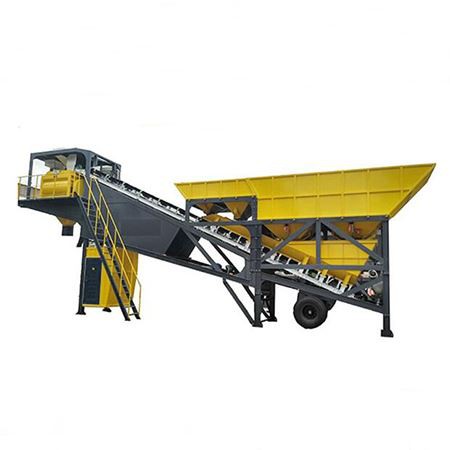
A mobile concrete batch plant, also known simply as a mobile batching plant or a mobile concrete mixing plant.

A readymix concrete plant, also known as a readymix concrete plant, is a facility where various ingredients are combined to produce concrete in a fixed location.
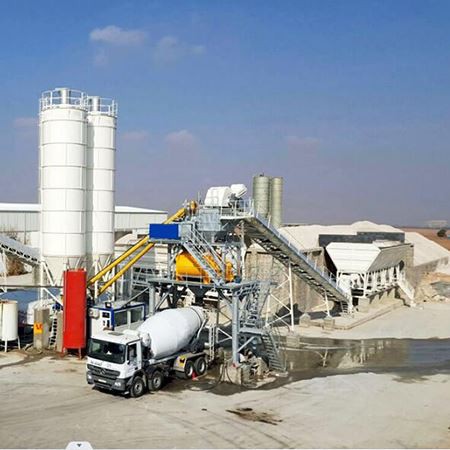
Schwing Stetter is a German-based company that specializes in manufacturing concrete construction equipment, including concrete batching plants.

A tower batching plant, also known as a vertical concrete batching plant or tower-type concrete batching plant.

Ready-mix concrete (RMC) plant machinery refers to the equipment and machinery used in the production of ready-mix concrete.

A concrete mixer plant, also known as a concrete batching plant or simply a batch plant, is a specialized facility used in construction for the production of concrete.

A small concrete batch plant is a compact and portable facility designed for producing concrete in small quantities.

A silo batching plant refers to a concrete batching plant that incorporates cement silos for the storage of cement.

A wet batch concrete plant, also known as a central mix concrete plant, is a type of concrete batching plant where all the concrete ingredients.
Benefits of Ready Mix Batch Plant
Consistent Quality
Batching plants ensure uniform mixing of concrete ingredients, resulting in consistent quality across all batches. The precision offered by such machine helps in achieving greater targets. This reliability is crucial for construction projects where strength and durability matter.
Efficiency and Productivity
Bulk Production: Batching plants can produce large volumes of concrete efficiently. This is especially advantageous for big construction projects.
Timely Delivery: Ready-mixed concrete (RMC) plants deliver concrete directly to construction sites, saving time and labor.
Customization
Batching plants allow customization of concrete mixtures based on project requirements. The modern systems come with software which can be customized to achieve the required results. Different grades, strengths, and workability can be achieved by adjusting proportions in the control system.
Reduced Waste
Precise batching in the modern plants always minimizes material wastage. Ingredients are measured accurately, reducing excess cement or aggregates. This way projects can be executed without any major hazzles.
Cost Savings
Efficient production and reduced waste translate to cost savings. This also allows to have better structures that will stand the test of time.
RMC plants eliminate the need for on-site mixing equipment and labor.
Environmental Impact
Batching plants can incorporate recycled materials into concrete mixtures, promoting sustainability.
Centralized production reduces transportation-related emissions. On site batching plants can delivery varied results of mix material as and when required.
Quality Control
Regular testing and monitoring ensure compliance with standards. Modern systems come with detailed printing options that allow customers to have a higher degree of flexibility.
Batching plants allow adjustments during production to maintain quality.
Flexibility
Mobile batching plants are portable and adaptable to various job sites. It is astounding to know and understand these mobile machines and the level of accuracy that they can offer.
Semi-automatic and fully automatic plants cater to different operational preferences.
Thus we understand that a concrete batching plant will play a crucial role in modern construction by providing consistent, efficient, and customizable concrete for our infrastructure needs.

Sizes Of Ready Mix Batch Plants Available As Mobile Type Are From 20 m3 to 60 m3/hr.
These are bigger sized plant, fully mobile type and designed for transporting over long distances. There are 4 bins for aggregates and sand. Separate weighing for cement and water gives ample of options to work with different recipes. The mixer here is twin shaft type. The plant can be erected on site in a quick time, it does not require heavy foundation for setting up the plant. The prewired design of the plant enables quick assembly and fast shifting of the sites. Control panel is inside a cabin which is folding type.
The stationary type of batching plant is manufactured from 30 to 200 m3 / hr. This plant comes with modular structures which can be loaded in to different containers. The stationary batching plant component sizes will vary accordingly to capacity requirement. The bigger concrete plant like 90 m3/hr. It will be of bigger size compared to the plant of capacity 45 m3/hr. Each of its component will be bigger in size to accommodate bigger components and a heavy mixing unit. They will require more space to install, more time for installation. These are ideal for producing non stop concrete from a single place.
Calibration checks on measuring devices (scales, water meters, admixture dispensers, and moisture probes) should be performed at least once every 6 months. Some State DOTs may have a requirement for these to be performed more frequently. Documentation of these calibrations should be maintained and made available to the inspector during the plant inspection.
Also, scale accuracy should be verified anytime the plant is moved (portable plants), maintenance activities on the plant impact the weighing systems, or when there is a concern on scale accuracy determined from the batch man operating the batching process or the quality of concrete. To that end, Arlyn Scales has replacement load cells, digital weight indicators, and other scale accessories to keep your concrete batching plant fully functioning all year long.

Residential Construction
In residential construction, ready mix concrete is commonly used for foundations, driveways, sidewalks, and patios. Its consistent quality and durability make it an excellent choice for these applications, ensuring the stability and longevity of homes and surrounding structures.
Commercial and Industrial Projects
For commercial and industrial projects, ready mix concrete is ideal for constructing office buildings, factories, warehouses, and shopping centers. Its ability to be customized for different structural requirements makes it suitable for a variety of load-bearing and non-load-bearing applications.
Infrastructure Development
Ready mix concrete plays a crucial role in infrastructure development, including roads, bridges, tunnels, and dams. Its high strength and durability ensure that these critical structures can withstand heavy usage and environmental stress over time.
Decorative Concrete
Beyond structural applications, ready mix concrete is also used for decorative purposes. It can be colored, stamped, or textured to create aesthetically pleasing surfaces for countertops, floors, and outdoor spaces. This versatility in design opens up numerous possibilities for creative architectural solutions.
Repair and Maintenance
Ready mix concrete is also valuable for repair and maintenance projects. Its ease of use and quick setting times make it ideal for patching cracks, resurfacing pavements, and reinforcing existing structures.
In operation, the concrete batching plant has 4 key components. These are the gravel feed; Powder feed component (cement, fly ash, bulking agents), water and feed additives, transmission and storage. The basic operation procedure of the machine can be defined as,
●System Activation; The mixing formula is input through the control panel, this also includes the concrete slump, grade and productivity. This is the calibration that will be used for the individual components of the mix.
●The hoppers are tested and calibrated for accuracy before the operation begins
●The belt conveyor is initiated to transmit the aggregate to the weighing hopper.
●The control valve of the water sump and admixtures are opened to allow water and admixtures to flow into weighing hopper.
●Once all weights have met the required volumes the doors of the weighing hoppers is opened automatically.
●The materials are released into the mixer where mixing continues until the setting time is over. The loading doors are then opened and the mix flows into a concrete mixer truck.
●This process is done very carefully to ensure the concrete does not segregate , and it must be used before the preliminary setting time of 30 – 45 minutes is reached.
●Conduct training sessions on protocols and emergency procedures for all personnel operating construction equipment.
●Ensure that everyone knows how to immediately shut off the batching plant in case of an emergency.
●On-site batch plants should be located in a way that does not pose hazards to the environment or the local community residing near the construction site.
●Implement procedures to minimize dust emissions, such as using covers for cement silos and bins containing cement and other aggregates.
●Inform all individuals working in the control room and on the job site about the location of the emergency shut-off switch, even those not operating the batching plant.
●Be prepared for emergencies by equipping the batch plant with self-closing flow control valves or override controls to manage the flow of cement and aggregates during concrete production.
●Place control rooms at a safe distance from the loading and mixing areas to prevent inhalation of dust generated during the weigh batching process.
●Ensure that everyone on site wears appropriate protective clothing, headgear, and eyewear. Construction sites have strict dress codes due to hazardous materials and heavy-duty equipment that can be dangerous in inexperienced hands or in case of equipment failure.
●Cement dust can irritate the eyes, nose, throat, and respiratory system. Avoid eating or drinking where cement dust is present, and remember to wash hands before eating.
●To avoid ingesting cement dust, it is advisable to remove protective clothing worn while operating a batch plant before eating or returning home at the end of the workday.
Ready mix batch plant capacity calculation involves a number of factors, including the volume of concrete mixer machine, the material charging method, model, the working hours and the variety of concrete. The capacity of concrete batching plant is usually closely related to the capacity of the concrete mixer it uses. The capacity of the concrete mixer determines the amount of concrete to be mixed at a time. For example, if a concrete mixer has a capacity of 2 cubic meters, it can theoretically mix 2 cubic meters of concrete at a time. By combining the capacity of the concrete mixer and the mixing frequency (i.e., the number of mixes per hour), the hourly output of the mixing plant can be roughly estimated to be 120m3/h.
The model of concrete batching plant is named according to its discharge size, for example, HZS120 means 120 cubic meters per hour. However, it should be noted that there is a certain difference between the model number of the concrete batching plant and the actual production capacity. For example, the theoretical production capacity of HZS25 concrete batching plant is 25 cubic meters per hour, but the actual production capacity may only be 15-20 cubic meters per hour.
Our Factory

Zhengzhou Jinheng Machinery Equipment Co., Ltd Since 2015.
It is a garden type concrete mixing plant, covers an area of only 5000 square meters. No aggregate stacking yard, unattended vehicle entry and exit system, building design, aggregate vertical feeding, high efficiency, low energy, environmental protection.
●Photovoltaic power supply system (can be automatically switched with the mains)
●Stable outsourced parts (BHS/SICOMA/WAM/SIEMENS)
●Large closed bone silo (No forklift)
●Intelligent control system (concrete mixing plant)
●Concrete mixing station remote operation and maintenance system
Our Certificate

Ultimate FAQ Guide to Ready Mix Batch Plant
Hot Tags: ready mix batch plant, China ready mix batch plant manufacturers, suppliers, factory, hzs90, Small Concrete Batching Plant, 2022 new batch concrete mixer, Batching Plant Silo, Concrete Plant, cement ceramsite lightweight wallboard production line
Previous
Wet Batch Concrete PlantYou Might Also Like


Send Inquiry