


Concrete Batching Plants
Since 1998, Jinheng Machinery has been focusing on the design and production of the concrete mixing industry. Covering an area of 360000 square meters, it has two major production bases (Qingdao and Zhengzhou) and is divided into two business units (wet mixing and dry powder), with over 150 employees.
Strict production processes are essential for improving equipment quality. JHT has processing equipment such as rust removal sandblasting machines, laser CNC machines, CNC laser cutting, boring machines, drilling machines, automatic welding robots, and electronic CNC rolling machines.
Excellent equipment production lines and stable quality supporting parts are guaranteed. 20 years of experience in designing and manufacturing concrete mixing plants, long-term cooperation, and collaboration with BHS, SICOMA, WAM, ABB, IBM, SIEMENS Established a good friendship.
Why choose us?
Quality assurance
The design engineers of Jinheng Machinery are all from Sany and Nanlu Machinery, and have been sent to Türkiye and Germany for many times to study. Strictly follow the drawings, processing procedures, and production assembly during the production process.
Good service
Sales is divided into three processes: pre-sales, in sales, and after-sales: pre-sales sales engineers communicate with customers to determine design solutions; Sales and pre-sales engineers communicate to determine the plan, while after-sales engineers are responsible for installation and debugging.
Reasonable price
In order to provide customers with low-cost and high-quality concrete mixing plants. We adopt the "Mixing Plant Manufacturing Shared Factory" to provide OEM services to global customers. Let the price of the product return to the material itself.
Fast delivery
Jinheng Machinery aims to solve the problems of crowded production orders and slow delivery. Distributed production of production orders starts with design engineers designing and processing drawings, which are then transmitted to the corresponding processing plants.

Parameters of wet mix concrete plant Our Products Modular design, reduce shipping costs and installation time Adopt fine weighing system, automatic learning complement and buckle weighing Digital Visual Management System to reduce staff Our advantage of wet mix concrete plant Heavy duty chassis...
A hot mix batching plant, also known as an asphalt mixing plant or simply asphalt plant, is a facility used for the production of hot-mix asphalt (HMA). Hot-mix asphalt is a mixture of aggregate (stone, sand, or gravel) and liquid asphalt cement, which is heated and mixed at high temperatures...

A global batching plant typically refers to a concrete batching plant that is designed, manufactured, and deployed on an international scale. These plants are used to produce ready-mix concrete for various construction projects around the world. Here are some key aspects related to global...

Fully Automatic Batching Plant
A fully automatic batching plant is a facility used in the concrete industry for the automatic production of ready-mixed concrete. It is designed to streamline the concrete production process, enhance efficiency, and reduce manual intervention.

Fully Automatic Concrete Batching Plan
A fully automatic concrete batching plant is a facility that automatically and consistently measures ingredients, mixes them in predetermined proportions, and dispenses the final concrete mix without requiring manual intervention.

Determining the "best" ready-mix concrete (RMC) plant depends on various factors, including your specific requirements, location, budget, and project specifications. Different RMC plants may excel in different aspects.

An on-site batching plant, also known as a mobile or portable concrete batching plant, is a facility set up directly at a construction site to produce concrete on demand.

Setting up a new Ready-Mix Concrete (RMC) plant involves several crucial steps to ensure its successful establishment, compliance with regulations, and the production of high-quality concrete.

Setting up a new ready-mix concrete plant involves a series of steps to ensure that the facility is well-designed, compliant with regulations, and capable of producing high-quality concrete for construction projects.

What is Concrete Batching Plants
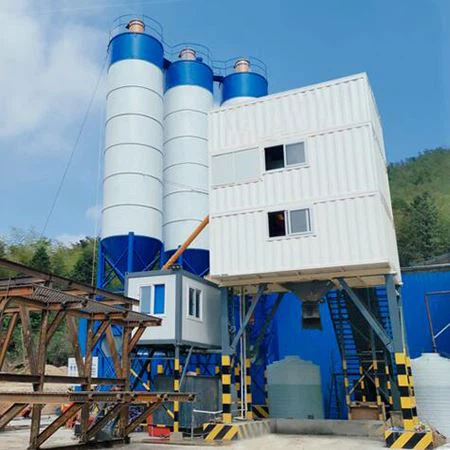
A concrete plant, also known as a batch plant or batching plant or a concrete batching plant, is equipment that combines various ingredients to form concrete. Some of these inputs include water, air, admixtures, sand, aggregate (rocks, gravel, etc.), fly ash, silica fume, slag, and cement. A concrete plant can have a variety of parts and accessories, including: mixers (either tilt drum or horizontal, or in some cases both), cement batchers, aggregate batchers, conveyors, radial stackers, aggregate bins, cement bins, heaters, chillers, cement silos, batch plant controls, and dust collectors.
Consistent quality
These plants ensure uniformity in concrete composition through precise mixing ratios, enhancing structural integrity and durability.
Operational efficiency
Automation streamlines production processes, reducing manual labor, saving time, and optimizing resource utilization.
Versatility and adaptability
From standard concrete to specialized mixes, batching plants cater to diverse project requirements, promoting flexibility and customization.
Cost-effectiveness
By maximizing efficiency and minimizing waste, these plants contribute to cost savings across construction projects.
Environmental sustainability
Modern plants integrate eco-friendly features, reducing environmental impact through energy efficiency and waste management practices.
Types of Concrete Batching Plants
1.) Central mix batching plants
A central mix concrete plant is a type of concrete batch plant that combines all of the ingredients necessary to create concrete in a single mixing drum or a central mixer. This type of plant is ideal for large-scale commercial and industrial concrete production because of its high output rate and the ability to produce a consistent, quality product. This type of plant is also well suited for pre-cast concrete production and ready-mix concrete production.
2.) Ready mix concrete batching plants
A ready mix concrete plant is a facility that specializes in mixing and producing ready-mixed concrete for construction projects. The concrete is pre-mixed and ready to use at the job site. The plant typically has a mixer, a weighing system, storage silos, and other equipment necessary for the production of concrete. Ready mix concrete plants are used in a variety of construction projects, from commercial and residential projects to large-scale infrastructure projects.
3.) Dry batch concrete plants
A dry batch concrete plant is a type of concrete plant that uses a dry mix of ingredients, such as sand, gravel, cement and water, to create concrete. The concrete is mixed in a batch process, with the dry ingredients blended together in a mixer before being discharged into a delivery truck for transport to the job site. Dry batch concrete plants are typically used for high-volume concrete production and can be used for pre-cast concrete, ready-mix concrete, and shotcrete.
4.) Mobile batch concrete plants
A mobile batch concrete plant is a type of concrete production equipment that is portable and can be moved from one location to another. It combines all the ingredients necessary to produce concrete including aggregates, water, cement, and admixtures. The batch plant is typically mounted onto a trailer or other mobile platform and is capable of producing concrete on demand. The plant can be set up to produce standard concrete mixes or customized mixes depending on the needs of the project.
5.) Stationary batch concrete plants
A stationary concrete batching plant is a large, permanent installation that typically remains in one location for an extended period of time. It is designed to produce concrete on a large scale, with a variety of batch sizes and configurations. Stationary concrete batching plants typically consist of a series of large, interconnected components, such as mixers, aggregate bins, cement silos, and conveyor belts, as well as a control system for managing the production process. They are usually powered by electricity, and may also be connected to a water supply for mixing and other operations.
6.) Continuous batching concrete plants
A continuous concrete batching plant is a type of plant that performs batching operations on a continuous basis. This type of plant is typically used to produce large amounts of concrete quickly, efficiently and with high quality standards. The continuous concrete batching plant is composed of a series of components, including a mixer, conveyors, silos, dust collectors, and a control system. The control system is used to control the entire operation, from the mixing of the ingredients to the delivery of the concrete.
The processing of the concrete batching starts by aggregate feeding into individual bins. As set in the control panel aggregates weigh individually as per the design. After weighing the aggregates, it is been further transformed into the mixing unit. There are weigh hoppers for cement, additive and water present above the mixing unit that aims at transferring the content to the mixing unit. By means of weigh conveyor, cement is been transformed and water is also been pumped. The concrete is been made in the twin shaft mixer where are all the ingredients are mixed uniformly. The timer is been set for mixing of the ingredients by the help of control panel and the time elapses mixing process stops and the truck is been loaded by the concrete.

Application Areas of Concrete Batching Plants
Residential and commercial buildings
This category includes the construction of homes, apartments, office buildings, shopping centers, and other structures that serve as living or business spaces. Key components involve laying solid foundations, constructing durable floors, and ensuring all structural elements meet safety and design standards.
Infrastructure
The development and maintenance of essential public works such as roads, bridges, highways, and tunnels. These projects are crucial for facilitating transportation, connecting communities, and supporting economic growth. They require careful planning and execution to accommodate heavy traffic and withstand environmental challenges.
Industrial projects
Focuses on the construction of factories, warehouses, and other large-scale industrial facilities. These projects are designed to support manufacturing, storage, and distribution activities. They must adhere to specific industry standards and regulations, ensuring efficiency in operations and safety for workers.
Components of Concrete Batching Plants
Aggregate feeders
Feeding unit is one of the important component. There are bins located side by side to facilitate feeding of coarse aggregates and sand. The different number of bins are there which will hold different sized aggregates / sand into different compartment. The reason behind putting each material (size wise) into separate bins is that each material will be weighed separately as per designated mix ratio.
Aggregate weigh conveyor
Weigh conveyor usually sits below the aggregate feeders. It is suspended and hanging on load cells. It is to weigh aggregates one by one and then transfer the same to charging conveyor of skip. Aggregates are discharged to the weigh conveyor by opening and closing of pneumatic cylinders.
Charging conveyor / Skip
Charging conveyor or a skip is to carry the weighed aggregates to the mixing unit.
Cement weigh scale
Cement weigh scale will hold the cement in small quantity that is transferred from the cement silo / hopper via a screw conveyor. Its task is to weigh the aggregates prior to dispatch into the mixing unit.
Water weigh scale
Water weigh scale receives water from water pump. It will hold water and weigh the water as per the recipe set in the control panel and then add the same into the mixing unit.
Additive weigh scales
Additive weigh scales are suspended on load cells and they will weigh the additive material prior to dispatch into the mixer.
Cement silo / hopper with screw conveyor
Cement silo is to hold large volumes of cement that comes in bulk trucks. It is usually provided with safety accessories. A screw conveyor of suitable diameter and length is at the bottom enabling transfer of cement into the cement weigh hopper. Many small capacity of batching plant machines are equipped with a cement hopper. The opening of the hopper is big and it facilitates adding of cement that comes in bags. Bags have to be placed on top of the hopper and once they are torn, cement will fall into the hopper. Cement hoppers are also provided with screw conveyor for transfer of cement into the weigh hopper. Usually a weigh hopper has 2 openings on top for inlet of 2 screw conveyors.
Mixing unit
This is the most critical part and heart of the concrete batch mixing plant. The job of the mixer is to receive all the ingredients and mix them thoroughly for a fixed time. Then it will discharge the contents into a transit mixer or a concrete pump.
Air compressor
Air compressor is one of the important components here. It is used to control all the pneumatic operations of the concrete batch mixer like opening and closing of cylinders that control the feeder gates, opening and closing of butterfly valves fitted with weigh hoppers, opening and closing of the mixing unit gate, etc.
Control panel
Control panel will control the working of the machine. Latest machines are equipped with PLC panel for ease of usage. It is also possible to save and print mix material recipes in the latest equipment. Control panel assist in fast and accurate measurements of the ingredients. With growing demand for high quality and accurate concrete it becomes important to produce quality material without any wastage. This is where control panel helps to control all components of the batching plant.
Maintenance and Safety of Concrete Batching Plants
To ensure the longevity and safe operation of concrete batching plants, proper maintenance and safety measures need to be taken. Let's take a closer look at maintenance and safety considerations for concrete batching plants:
Regular inspections: Regular inspections of the batching plant should be conducted to identify any issues or potential problems.
Cleaning: The batching plant should be kept clean to prevent the build-up of concrete and other materials that can cause blockages.
Lubrication: Moving parts of the batching plant should be lubricated regularly to ensure smooth operation.
Calibration: The weighing and measuring systems of the batching plant should be calibrated regularly to ensure accurate measurements.
Repairs: Any damaged or faulty parts of the batching plant should be repaired or replaced promptly to prevent further damage.
Safety equipment: Adequate safety equipment such as hard hats, safety glasses, and earplugs should be provided to workers.
Training: Workers should be trained on how to operate the batching plant safely and how to respond to emergencies.
Lockout/tagout procedures: Lockout/tagout procedures should be in place to prevent accidental start-up or movement of the batching plant.
Fire safety: Fire safety measures, including fire extinguishers, should be in place to prevent and manage fires.
Electrical safety: Electrical safety measures, including regular inspections and maintenance of electrical systems, should be in place to prevent electrical hazards.
How to Choose the Right Concrete Batching Plants


Production capacity and output requirements:
One of the most important factors to consider when selecting a concrete batching plant is the production capacity needed to meet the project requirements. The plant's capacity should align with the project's size and the estimated concrete output. Additionally, consider factors like the duration of the project and the frequency of concrete pours.
Type of project (e.g., residential, commercial, industrial):
The type of project being undertaken is another crucial factor to consider when selecting a batching plant. For example, residential projects may require smaller batching plants that can produce lower volumes of concrete, while commercial or industrial projects may require larger plants with higher production capacities.
Location and environmental factors (e.g., weather, noise restrictions):
Location and environmental factors can also play a critical role in selecting a batching plant. For instance, if the project site is in an urban or residential area, noise restrictions may be in place, which may limit the type of batching plant that can be used. Similarly, weather conditions like high winds or extreme temperatures may also affect the choice of batching plant.
Type of concrete needed (e.g., precast, ready-mix, specialty):
The type of concrete needed for the project should also be considered when choosing a batching plant. For example, precast concrete requires a different batching and mixing process than ready-mix concrete. Similarly, specialty concrete mixes may require specific equipment or capabilities that not all batching plants possess.
Budget and cost considerations:
Finally, budget and cost considerations should also be taken into account when selecting a batching plant. The cost of the plant, installation, and maintenance should align with the project's budget, and the overall cost-effectiveness of the plant should be considered. However, it's important not to compromise on quality or performance for cost-saving measures, as this can lead to additional costs and delays in the long run.
Certifications

Our Factory
Jinheng Machinery has been focusing on the design and production of the concrete mixing industry. Covering an area of 360000 square meters, it has two major production bases (Qingdao and Zhengzhou) and is divided into two business units (wet mixing and dry powder), with over 150 employees.
Strict production processes are essential for improving equipment quality. JHT has processing equipment such as rust removal sandblasting machines, laser CNC machines, CNC laser cutting, boring machines, drilling machines, automatic welding robots, and electronic CNC rolling machines.


FAQ
Q: How do you calculate batching plant capacity?
Q: What size plant for concrete batching?
Q: What is the minimum mixing time of concrete in batching plant?
Q: How to calculate batching plant capacity?
Q: What is a typical concrete batch plant?
Q: What is the job description of a concrete batching plant?
Q: What are the two common types of concrete batch plants?
Q: What does a concrete batching plant do?
Q: What is the difference between ready mix concrete and batching plant?
Q: What happens in a concrete batching plant?
Q: What material is in a concrete batching plant?
Q: What are the advantages of using a concrete batching plant?
Q: How many types of batching plants are there?
Q: What does a concrete batching plant comprise of?
Q: What is the process of concrete batching plant?
Q: How is batching of concrete done?
Q: How to inspect a concrete batching plant?
Q: How much water does a concrete batch plant use?
Q: What temperature is needed for batching plant concrete?
Q: What is chiller system for concrete batching plant?
Hot Tags: concrete batching plants, China concrete batching plants manufacturers, suppliers, factory, Batching Plant Silo, Small Concrete Batching Plant, Sicoma Concrete Batching Plant, concrete batching plants, Wet Concrete Batching Plant, Mini Concrete Batching Plant
Previous
Mini Concrete PlantYou Might Also Like


Send Inquiry