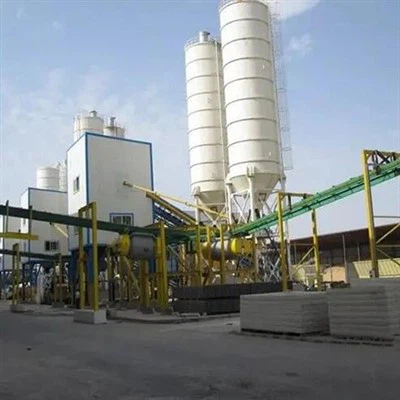
Hey there! As a supplier of batching plants, I've had my fair share of questions about different components of these plants. One of the most frequently asked about is the hopper system. So, let's dive right in and talk about what the hopper system in a batching plant is all about.
What's a Hopper System?
First things first, a hopper is basically a large container that's designed to hold and dispense materials. In a batching plant, hoppers play a super important role. They're used to store raw materials like aggregates (such as sand, gravel), cement, and sometimes additives.
The hopper system in a batching plant is a set of hoppers along with all the equipment that helps in the proper functioning of these hoppers. This includes things like the structure that holds the hoppers, the feeding mechanisms, and the control systems that manage the flow of materials from the hoppers.
Types of Hoppers in a Batching Plant
Aggregate Hoppers
Aggregate hoppers are where the sand, gravel, and other coarse materials are stored. These hoppers are usually quite large because aggregates are needed in large quantities for making concrete. They're designed to have a sloping shape at the bottom. This slope helps the aggregates to flow smoothly towards the discharge opening.
The size and number of aggregate hoppers in a batching plant can vary. Some smaller plants might have just one or two aggregate hoppers, while larger ones can have four or more. This allows for different types of aggregates to be stored separately, which is important because different projects might require different combinations of aggregates.
Cement Hoppers
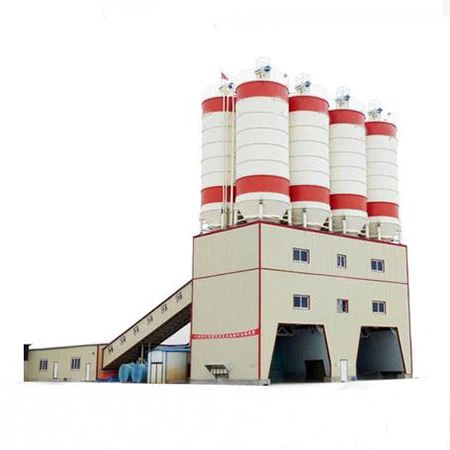
Cement hoppers are used to store cement. Cement is a crucial ingredient in concrete, and it needs to be stored properly to prevent it from getting wet and hardening. These hoppers are often made of steel and are airtight to keep the cement dry.
Cement hoppers are usually equipped with a screw conveyor or a pneumatic conveying system. The screw conveyor is like a large screw that rotates and moves the cement from the hopper to the mixer. The pneumatic conveying system uses compressed air to push the cement through pipes.
Additive Hoppers
Additives are substances that are added to the concrete to improve its properties. For example, some additives can make the concrete set faster or slower, or they can make it more workable. Additive hoppers are used to store these additives.
These hoppers are generally smaller than the aggregate and cement hoppers because additives are used in much smaller quantities. They're also designed to dispense the additives accurately, as even a small variation in the amount of additive can have a big impact on the concrete's properties.
How the Hopper System Works
The hopper system in a batching plant works in a coordinated way to ensure that the right amount of each material is added to the mixer at the right time.
First, the raw materials are loaded into the hoppers. Aggregates are usually loaded using a loader or a conveyor belt. Cement is typically delivered in bulk and pumped into the cement hoppers. Additives are added manually or through a dedicated feeding system.
Once the materials are in the hoppers, the control system comes into play. The control system is like the brain of the batching plant. It's programmed to measure the amount of each material that needs to be added to the mixer for a particular batch of concrete.
When it's time to start a batch, the control system sends signals to the feeding mechanisms of each hopper. For example, it might open a gate at the bottom of an aggregate hopper to let a certain amount of aggregates flow onto a conveyor belt. The conveyor belt then transports the aggregates to the mixer.
At the same time, the control system also activates the cement and additive feeding systems. The cement is conveyed from the cement hopper to the mixer, and the additives are dispensed in the correct amounts.
Importance of a Good Hopper System
A well-designed hopper system is crucial for the efficient operation of a batching plant. Here are some reasons why:

Accuracy
The hopper system needs to dispense the right amount of each material every time. If too much or too little of a material is added, it can affect the quality of the concrete. For example, if there's too much cement, the concrete might be too strong and brittle. If there's too little, the concrete might not have enough strength.
Efficiency
A good hopper system can help to speed up the batching process. By having a smooth flow of materials from the hoppers to the mixer, the plant can produce more batches of concrete in a shorter amount of time. This is especially important for large construction projects where a lot of concrete is needed quickly.
Safety
Properly designed hoppers and feeding mechanisms are important for the safety of the workers. For example, cement hoppers need to be airtight to prevent dust from escaping, as breathing in cement dust can be harmful to the lungs. Also, the feeding mechanisms need to be designed to prevent jams and blockages, which can cause accidents.
Our Batching Plant Hopper Systems
As a batching plant supplier, we offer high-quality hopper systems for our Fully Automatic Concrete Batching Plant. Our hoppers are made of high-quality materials and are designed to last.
We have different configurations of hopper systems to suit different needs. Whether you're looking for a Portable cement batch plant for a small project or an On Site Concrete Batching Plant for a large construction site, we've got you covered.
Our hopper systems are easy to install and maintain. We also provide training and support to our customers to ensure that they can operate the hopper systems efficiently.
Contact Us for Your Batching Plant Needs
If you're in the market for a batching plant or need to upgrade your existing hopper system, we'd love to hear from you. We can help you choose the right hopper system for your specific requirements. Whether you're a small contractor or a large construction company, we have the expertise and products to meet your needs. So, don't hesitate to get in touch with us to start a conversation about your batching plant needs.
References
- "Concrete Batching Plants: Design, Operation, and Maintenance" by John Doe
- "Handbook of Construction Materials" edited by Jane Smith