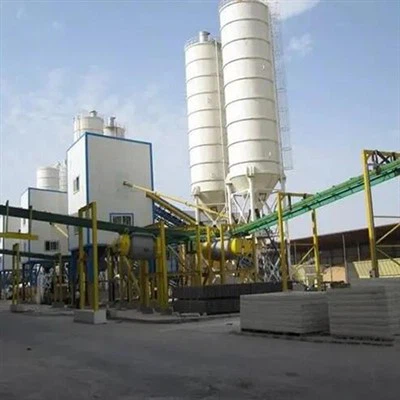
As a supplier for a Ready Mix Plant, I've witnessed firsthand the intricate dance of factors that come into play when it comes to mix design. The mix design in a Ready Mix Plant is a crucial process that determines the quality, performance, and cost - effectiveness of the concrete produced. In this blog, I'll delve into the key factors that affect the mix design and how they interact with one another.
1. Aggregate Characteristics
Aggregates, which include sand, gravel, and crushed stone, make up the bulk of concrete. Their characteristics significantly influence the mix design.
Particle Size Distribution
The particle size distribution of aggregates is vital. A well - graded aggregate blend, with a good mix of different particle sizes, fills the voids more efficiently. This leads to a more workable mix with less water requirement. For instance, if the aggregate has too many large particles, there will be large voids that need to be filled with mortar, increasing the cement and water demand. On the other hand, an excess of fine particles can also increase the water demand as more water is needed to coat the larger surface area of the fines.
Shape and Texture
The shape and texture of aggregates impact the workability and strength of the concrete. Rough - textured and angular aggregates provide better interlocking, which can enhance the strength of the concrete. However, they also increase the friction between particles, reducing workability. Smooth and rounded aggregates, such as river gravel, offer better workability but may result in lower strength compared to angular aggregates.
Specific Gravity and Absorption
The specific gravity of aggregates affects the weight of the concrete mix. Aggregates with a higher specific gravity will result in a heavier concrete. Absorption is equally important. Aggregates that absorb a significant amount of water will reduce the effective water - cement ratio in the mix, potentially leading to a stronger but less workable mix. Suppliers need to account for the absorption capacity of aggregates when determining the water content in the mix design.
2. Cement Type and Content
Cement is the binding agent in concrete, and its type and content play a critical role in the mix design.
Cement Type
There are different types of cement available, such as Portland cement, blended cements (e.g., Portland - fly ash cement, Portland - slag cement). Each type has its own characteristics. For example, Portland cement provides high early strength, which is suitable for projects where quick formwork removal is required. Blended cements, on the other hand, can offer benefits such as improved workability, reduced heat of hydration, and better long - term durability.
Cement Content
The amount of cement in the mix directly affects the strength and durability of the concrete. Generally, increasing the cement content increases the strength of the concrete. However, this also increases the cost of the mix. Moreover, a very high cement content can lead to increased shrinkage and cracking due to the higher heat of hydration. Finding the right balance between strength requirements and cost is essential in determining the optimal cement content.


3. Water - Cement Ratio
The water - cement ratio is one of the most critical factors in mix design. It is defined as the ratio of the weight of water to the weight of cement in the mix.
Strength and Durability
According to the Abrams' law, the strength of concrete is inversely proportional to the water - cement ratio. A lower water - cement ratio results in higher strength and better durability. This is because less water means less porosity in the concrete, reducing the penetration of harmful substances such as water, chemicals, and gases. However, a very low water - cement ratio can make the mix difficult to work with, requiring the use of superplasticizers to improve workability.
Workability
The water content in the mix also affects its workability. Adequate water is needed to make the concrete flow and be easily placed and compacted. But adding too much water to improve workability will increase the water - cement ratio, compromising the strength and durability of the concrete.
4. Admixtures
Admixtures are substances added to the concrete in small quantities to modify its properties.
Workability - enhancing Admixtures
Plasticizers and superplasticizers are commonly used to improve the workability of the concrete without increasing the water content. They disperse the cement particles, reducing the internal friction in the mix. This allows for a more fluid and workable concrete, which is especially useful for high - strength mixes with low water - cement ratios.
Set - controlling Admixtures
Accelerators and retarders are used to control the setting time of the concrete. Accelerators speed up the hydration process, which is beneficial in cold weather conditions or when early strength development is required. Retarders, on the other hand, slow down the setting time, which can be useful in hot weather or for large - scale concrete placements where longer workability is needed.
Air - entraining Admixtures
Air - entraining admixtures introduce tiny air bubbles into the concrete. These air bubbles improve the freeze - thaw resistance of the concrete by providing space for the expansion of water when it freezes. They also enhance the workability of the concrete.
5. Environmental Conditions
The environmental conditions at the time of concrete production and placement have a significant impact on the mix design.
Temperature
Temperature affects the rate of hydration of cement. In hot weather, the hydration process is accelerated, which can lead to rapid loss of workability and increased risk of cracking. To counter this, retarders may be added to the mix, and the aggregates may be cooled. In cold weather, the hydration process slows down, and the concrete may not gain strength as quickly. Accelerators and insulation may be used to ensure proper strength development.
Humidity
Low humidity can cause rapid evaporation of water from the concrete surface, leading to plastic shrinkage cracking. In such conditions, measures such as covering the concrete with plastic sheets or using curing compounds may be necessary. High humidity, on the other hand, can slow down the evaporation of water, which may be beneficial for the curing process.
6. Project Requirements
The specific requirements of the project also influence the mix design.
Strength Requirements
The required compressive strength of the concrete is a primary consideration. Different structures, such as buildings, bridges, and pavements, have different strength requirements. For example, a high - rise building may require high - strength concrete with a compressive strength of 6000 psi or more, while a residential driveway may only need concrete with a compressive strength of 3000 - 4000 psi.
Durability Requirements
The environment in which the concrete will be exposed determines the durability requirements. Concrete exposed to harsh chemicals, saltwater, or freeze - thaw cycles needs to be more durable. This may require the use of special cements, admixtures, or a lower water - cement ratio.
Workability Requirements
The method of concrete placement also affects the workability requirements. For example, concrete that is to be pumped over long distances or placed in heavily reinforced sections needs to be highly workable. On the other hand, concrete for a simple slab on grade may not require such high workability.
Mobile Concrete Plant and Small Rmc Plant
If you are in the market for a concrete plant, you might be interested in our Mobile Concrete Plant. These plants offer flexibility and mobility, allowing you to move them easily from one construction site to another. We also have Mobile Concrete Batch Plant For Sale, which are cost - effective solutions for small to medium - sized projects. For those with limited space or smaller production requirements, our Small Rmc Plant is an ideal choice.
Conclusion
In conclusion, the mix design in a Ready Mix Plant is a complex process that is influenced by multiple factors. Aggregate characteristics, cement type and content, water - cement ratio, admixtures, environmental conditions, and project requirements all interact with one another to determine the final properties of the concrete. As a supplier, it is our responsibility to carefully consider these factors and develop mix designs that meet the specific needs of our customers. If you have any questions about mix design or are interested in our concrete plant solutions, we encourage you to reach out for a procurement discussion. We are here to help you make the best choices for your construction projects.
References
- Neville, A. M. (1996). Properties of Concrete (4th ed.). Pearson Education.
- ACI Committee 211. (2014). Standard Practice for Selecting Proportions for Normal, Heavyweight, and Mass Concrete (ACI 211.1 - 14). American Concrete Institute.