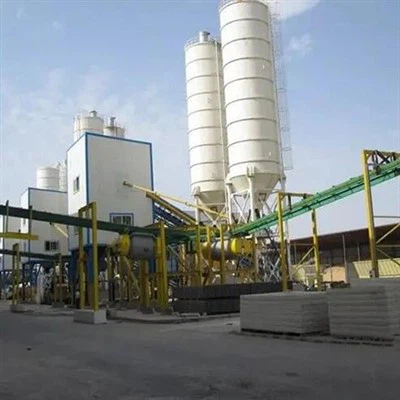
In the realm of modern industrial operations, precision and efficiency are the cornerstones of success. One such area where these principles are crucial is in batching plants, which play a pivotal role in the production of various materials, including concrete. A key aspect of ensuring the quality and consistency of the products in a batching plant is monitoring the temperature. This begs the question: Can a Programmable Logic Controller (PLC) be used to monitor the temperature in a batching plant? As a PLC batching plant supplier, I am well - positioned to delve into this topic and provide valuable insights.
The Role of Temperature in a Batching Plant
Before we explore the use of PLCs for temperature monitoring, it's essential to understand why temperature is so important in a batching plant. In a concrete batching plant, for example, temperature affects the setting time, strength development, and workability of the concrete. If the temperature is too high, the concrete may set too quickly, leading to difficulties in placing and finishing. On the other hand, if the temperature is too low, the hydration process may slow down significantly, delaying the strength gain of the concrete.
In addition to concrete production, other materials processed in batching plants, such as asphalt, also have specific temperature requirements. Maintaining the right temperature ensures that the material properties are within the desired range, which is crucial for the overall quality of the final product.
What is a Programmable Logic Controller (PLC)?
A Programmable Logic Controller is an industrial computer system that has been designed to perform control functions in manufacturing and other industrial processes. PLCs are highly reliable, flexible, and can be easily programmed to perform a wide variety of tasks. They are typically used to control machinery, automate processes, and monitor various parameters.
PLCs consist of a central processing unit (CPU), input/output (I/O) modules, and a programming device. The CPU is responsible for executing the control program, while the I/O modules are used to interface with sensors and actuators in the industrial process. The programming device is used to develop and modify the control program.
Using PLCs for Temperature Monitoring in a Batching Plant
Yes, a PLC can indeed be used to monitor the temperature in a batching plant. Here's how it works:
1. Sensor Integration
The first step in using a PLC for temperature monitoring is to integrate temperature sensors into the batching plant system. There are various types of temperature sensors available, such as thermocouples, resistance temperature detectors (RTDs), and thermistors. These sensors are installed at strategic locations in the batching plant, such as in the mixing drums, storage silos, or conveyor belts, to measure the temperature of the materials.
The sensors convert the temperature into an electrical signal, which is then sent to the input modules of the PLC. The PLC can handle different types of input signals, depending on the type of sensor used. For example, thermocouples typically produce a small voltage signal, while RTDs produce a resistance change that can be measured and converted into a temperature value.
2. Data Processing
Once the temperature data is received by the PLC, the CPU processes the data according to the programmed logic. The PLC can be programmed to perform various tasks, such as comparing the measured temperature with a setpoint value, calculating temperature averages over a certain period, or detecting temperature trends.
For example, if the measured temperature is above or below the setpoint value, the PLC can trigger an alarm or activate a control action. This could involve adjusting the heating or cooling systems in the batching plant to bring the temperature back to the desired range.
3. Communication and Control
In addition to monitoring the temperature, a PLC can also communicate with other devices in the batching plant system. It can send the temperature data to a human - machine interface (HMI), such as a touchscreen panel, where operators can view the temperature readings in real - time. The PLC can also communicate with other control systems, such as the motor control centers or the material handling systems, to coordinate the overall operation of the batching plant.
Moreover, the PLC can be integrated with a supervisory control and data acquisition (SCADA) system. SCADA systems allow for remote monitoring and control of the batching plant, enabling operators to access the temperature data and control the plant from a central location.
Advantages of Using PLCs for Temperature Monitoring in a Batching Plant
There are several advantages to using PLCs for temperature monitoring in a batching plant:


1. Accuracy and Precision
PLCs can provide highly accurate and precise temperature measurements. They can handle small changes in temperature and can be calibrated to ensure the accuracy of the readings. This is crucial for maintaining the quality of the products in the batching plant.
2. Flexibility
PLCs are highly flexible and can be easily programmed to meet the specific requirements of different batching plants. The control program can be modified or updated as needed, allowing for changes in the temperature monitoring strategy or the addition of new sensors.
3. Reliability
PLCs are designed to operate in harsh industrial environments. They are resistant to dust, moisture, and electrical interference, which ensures reliable operation over long periods. This is important for continuous temperature monitoring in a batching plant, where any downtime can lead to significant losses.
4. Cost - effectiveness
Compared to other temperature monitoring systems, PLCs can be a cost - effective solution. They can perform multiple functions, such as temperature monitoring, control, and communication, with a single device. This reduces the need for multiple standalone systems, which can save on equipment and installation costs.
Real - World Applications
In real - world batching plant operations, the use of PLCs for temperature monitoring has proven to be highly effective. For example, in a Small concrete mixing plant, a PLC can be used to monitor the temperature of the concrete during the mixing process. By maintaining the right temperature, the quality of the concrete can be improved, and the production efficiency can be increased.
In a Cement Concrete Batching Plant, the PLC can monitor the temperature of the cement and other raw materials in the storage silos. This helps to prevent issues such as premature setting or clumping of the materials, which can affect the quality of the final concrete product.
Similarly, in a Mobile Ready Mix Concrete Plant, the PLC can be used to monitor the temperature of the concrete during transportation. This ensures that the concrete arrives at the construction site in the right condition, with the desired workability and strength.
Conclusion
In conclusion, a PLC can be effectively used to monitor the temperature in a batching plant. By integrating temperature sensors, processing the data, and communicating with other devices, PLCs provide a reliable, accurate, and flexible solution for temperature monitoring. The advantages of using PLCs, such as accuracy, flexibility, reliability, and cost - effectiveness, make them an ideal choice for batching plant operators.
If you are in the market for a PLC batching plant system that can effectively monitor temperature and improve your production efficiency, we are here to help. Our team of experts can provide you with customized solutions tailored to your specific needs. Contact us today to start a discussion about your requirements and explore how our PLC batching plant systems can benefit your business.
References
- "Industrial Automation Handbook", Second Edition, by Thomas H. Lee
- "PLC Programming: A Practical Approach", by Benjamin C. Kuo
- "Temperature Measurement and Control in Industrial Processes", by John M. Smith