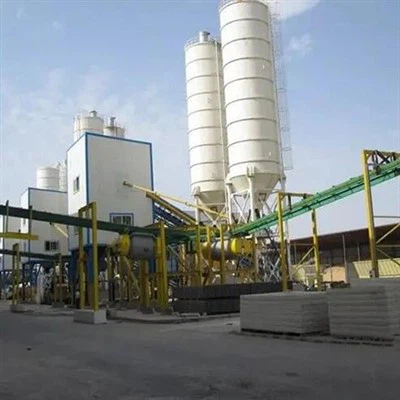
In the construction industry, concrete is an indispensable building material, and concrete mixing stations play a crucial role in ensuring the efficient and high - quality production of concrete. As a professional concrete mixing station supplier, I am well - versed in the different types of concrete mixing stations available in the market. In this blog, I will introduce several common types of concrete mixing stations to help you make a more informed choice for your construction projects.
1. Stationary Concrete Mixing Stations
Stationary concrete mixing stations are the most traditional and widely used type in large - scale construction projects. These stations are designed to be installed in a fixed location for long - term use. They are usually large in scale and have high production capacities, making them suitable for large infrastructure projects such as bridges, dams, and high - rise buildings.
One of the main advantages of stationary concrete mixing stations is their high stability and reliability. Since they are fixed, they can be equipped with large - sized mixing equipment and storage silos, which can ensure a continuous and stable supply of concrete. The mixing technology of stationary stations is also relatively mature, and they can accurately control the proportion of various raw materials, thus producing high - quality concrete.
For example, in the construction of a large - scale bridge project, a stationary concrete mixing station can be set up near the construction site. The station can continuously produce a large amount of concrete with strict quality control, meeting the high - strength and durability requirements of the bridge structure.
However, the installation and commissioning of stationary concrete mixing stations require a relatively long time and high costs. They also lack mobility, which means they cannot be easily moved to other construction sites once installed.
2. Mobile Concrete Mixing Stations
Mobile concrete mixing stations, as the name implies, are designed to be movable. They are usually installed on trailers or trucks, which makes them highly flexible and suitable for small - to - medium - sized construction projects or projects in remote areas.
The main advantage of mobile concrete mixing stations is their mobility. They can be quickly transported to different construction sites, reducing the transportation cost of concrete. For example, in rural road construction projects, where construction sites are often scattered, a mobile concrete mixing station can be moved from one location to another, providing on - site concrete production.
Mobile concrete mixing stations also have a relatively short installation and commissioning time. They can start production quickly after arriving at the construction site, which is very beneficial for projects with tight schedules.
However, due to their limited space, the production capacity of mobile concrete mixing stations is generally lower than that of stationary stations. They may also have some limitations in terms of the types and quantities of raw materials they can store.
3. Batch Mix Concrete
Batch mix concrete mixing stations produce concrete in batches. In this type of station, the raw materials such as cement, aggregates, water, and additives are measured and loaded into the mixer in a specific order and quantity for each batch.
The key advantage of batch mix concrete mixing stations is the high precision of the concrete mixture. Since each batch is independently measured and mixed, it is easier to control the quality of the concrete. The proportion of raw materials can be adjusted according to different construction requirements, ensuring that the concrete meets the specific strength, workability, and durability standards.
In addition, batch mix concrete mixing stations are relatively simple in structure and easy to operate. They are suitable for a wide range of construction projects, from small - scale building renovations to large - scale commercial construction.
However, the production efficiency of batch mix concrete mixing stations may be lower compared to some continuous - mixing stations, especially when large - volume concrete production is required.
4. Continuous Mixing Concrete Stations
Continuous mixing concrete stations continuously feed raw materials into the mixer and continuously produce concrete. Unlike batch mix stations, there is no clear separation between batches in continuous mixing stations.
The main advantage of continuous mixing concrete stations is their high production efficiency. They can continuously produce a large amount of concrete, which is very suitable for large - scale infrastructure projects with high - volume concrete requirements, such as large - scale airport runways or highway construction.
Continuous mixing stations also have relatively simple operation procedures. Once the equipment is set up and the raw material feeding system is adjusted, the station can operate continuously with relatively little manual intervention.
However, continuous mixing concrete stations require more precise control of the raw material feeding rate to ensure the quality of the concrete. Any deviation in the feeding rate may affect the uniformity and quality of the concrete mixture.
5. Concrete Portable Batch Plant
Concrete portable batch plants combine the features of portability and batch - mixing. They are designed to be easily transported and can produce concrete in batches.


These plants are very suitable for small - scale construction projects or projects with changing construction locations. For example, in the construction of small - scale residential buildings or landscape projects, a concrete portable batch plant can be moved to different parts of the site as needed, providing on - site concrete production with batch - mixing precision.
The installation and disassembly of concrete portable batch plants are relatively easy, and they can be quickly set up and put into production. They also offer a certain degree of flexibility in terms of production capacity and can be adjusted according to the actual needs of the project.
6. Concrete And Plants
When we talk about "Concrete And Plants", it generally refers to a comprehensive concrete production system that may include both the mixing equipment and the associated facilities for storing and handling raw materials.
A well - designed "Concrete And Plants" system can ensure the efficient and coordinated operation of the entire concrete production process. It can integrate functions such as raw material storage, weighing, mixing, and concrete transportation, providing a one - stop solution for construction projects.
This type of system is often customized according to the specific requirements of different construction projects. It can be designed to have different production capacities, mixing technologies, and levels of automation, meeting the diverse needs of the construction industry.
In conclusion, different types of concrete mixing stations have their own unique advantages and disadvantages, and the choice of the appropriate type depends on the specific requirements of the construction project, such as the scale of the project, the location of the construction site, the required production capacity, and the quality requirements of the concrete.
As a professional concrete mixing station supplier, we have a wide range of products to meet your various needs. Whether you need a large - scale stationary concrete mixing station for a major infrastructure project or a small - sized mobile concrete mixing station for a rural construction project, we can provide you with high - quality equipment and professional services.
If you are interested in our concrete mixing stations or have any questions about choosing the right type for your project, please feel free to contact us for more information and start a procurement negotiation. We are committed to helping you find the most suitable solution for your construction needs.
References
- "Concrete Technology" by P. Kumar Mehta and Paulo J. M. Monteiro
- "Construction Materials: Their Nature and Behaviour" by John Newman and Bruce Choo