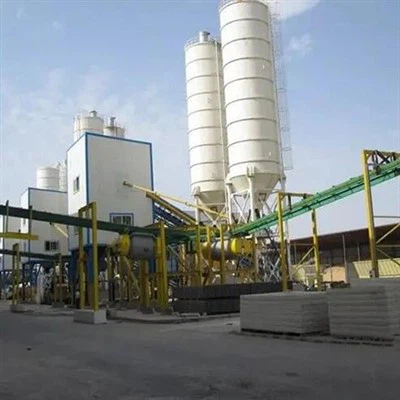
Hey there! I'm a supplier of Central Mixing Plants, and today I'm gonna chat with you about what materials can be mixed in a Central Mixing Plant.
The Basics of a Central Mixing Plant
First off, let's quickly go over what a Central Mixing Plant is. It's a facility where various materials are combined to create a homogenous mixture, usually for construction purposes. These plants are super important in the building industry as they ensure a consistent quality of the final product.
Common Materials Mixed in a Central Mixing Plant
Aggregates
Aggregates are a key component in a Central Mixing Plant. They can be divided into two main types: fine aggregates and coarse aggregates. Fine aggregates, like sand, are small particles that fill the gaps between the coarse aggregates. Coarse aggregates, such as gravel or crushed stone, provide the bulk and strength to the mixture.
Sand is a widely used fine aggregate. It comes in different types, like river sand, pit sand, and manufactured sand. River sand is smooth and well - graded, which makes it great for concrete production. Pit sand, on the other hand, is coarser and has a more angular shape, giving it better bonding properties. Manufactured sand is produced by crushing rocks and is becoming increasingly popular due to the limited availability of natural sand.
Gravel and crushed stone are common coarse aggregates. Gravel is formed by the natural weathering and erosion of rocks, while crushed stone is produced by mechanically crushing large rocks. Both of them come in various sizes, and the choice depends on the specific requirements of the project. For example, larger aggregates are used in heavy - duty concrete applications, while smaller ones are suitable for more delicate work.
Cement
Cement is the binding agent in a Central Mixing Plant. It reacts with water in a process called hydration, which causes the mixture to harden and gain strength. There are different types of cement, such as Portland cement, which is the most commonly used type. Portland cement is made by heating limestone and clay at high temperatures and then grinding the resulting clinker into a fine powder.
Other types of cement include blended cements, which are a combination of Portland cement and other materials like fly ash, slag, or silica fume. These blended cements offer improved properties such as better durability, reduced heat of hydration, and lower lower lower (oops, I meant to say reduced heat of hydration), and lower cost.
Water
Water is essential for the hydration process of cement. It not only activates the cement but also helps in the workability of the mixture. The quality of water used in a Central Mixing Plant is crucial. Water that contains impurities like salts, acids, or organic matter can affect the setting time and strength of the concrete. Generally, clean, potable water is recommended for use in the mixing process.
Admixtures
Admixtures are substances added to the mixture in small quantities to modify its properties. There are several types of admixtures:
- Water - reducing admixtures: These admixtures reduce the amount of water needed in the mixture while maintaining the workability. This results in a stronger and more durable concrete.
- Retarding admixtures: They slow down the setting time of the concrete, which is useful in hot weather or when long - distance transportation is required.
- Accelerating admixtures: As the name suggests, these admixtures speed up the setting time of the concrete, which is beneficial in cold weather or when quick strength gain is needed.
- Air - entraining admixtures: These admixtures introduce tiny air bubbles into the concrete, which improves its resistance to freezing and thawing cycles.
Supplementary Cementitious Materials (SCMs)
SCMs are materials that can partially replace cement in a Central Mixing Plant. They not only reduce the cost of the mixture but also offer environmental benefits by reducing the carbon footprint of the concrete. Some common SCMs include:
- Fly ash: It is a by - product of coal - fired power plants. Fly ash can improve the workability, durability, and long - term strength of the concrete.
- Slag: Slag is a by - product of the iron and steel industry. It has cementitious properties and can enhance the strength and durability of the concrete.
- Silica fume: Silica fume is a very fine powder produced as a by - product of the silicon and ferrosilicon industry. It can significantly improve the strength and durability of the concrete, especially in high - performance applications.
Specialized Materials
In addition to the common materials, there are also some specialized materials that can be mixed in a Central Mixing Plant depending on the specific project requirements.
Fiber Reinforcements
Fiber reinforcements, such as steel fibers, synthetic fibers, or natural fibers, can be added to the mixture to improve its tensile strength and crack resistance. Steel fibers are commonly used in industrial floors, pavements, and shotcrete applications. Synthetic fibers, like polypropylene fibers, are lightweight and can help reduce plastic shrinkage cracks in the concrete. Natural fibers, such as jute or sisal, are environmentally friendly alternatives but have lower durability compared to steel and synthetic fibers.
Colorants
Colorants are used to give the concrete a specific color. They can be in the form of pigments or dyes. Pigments are more commonly used as they are more stable and fade - resistant. Colorants are often used in architectural concrete applications, such as decorative pavements, facades, and precast elements.
Choosing the Right Central Mixing Plant
If you're in the market for a Central Mixing Plant, we offer a variety of options. Check out our Small Concrete Batch Plant for smaller projects or limited spaces. For larger - scale operations, our New Ready Mix Plants are a great choice. And if you're looking for a high - performance solution, our Concrete Mixer Machine Plant will meet your needs.
Let's Talk Business
If you're interested in any of our Central Mixing Plants or have questions about the materials that can be mixed in them, don't hesitate to reach out. We're here to help you make the right choice for your project. Whether you're a small contractor or a large construction company, we have the expertise and products to meet your requirements.


References
- Neville, A. M. (1995). Properties of Concrete. Pearson Education.
- Mindess, S., Young, J. F., & Darwin, D. (2003). Concrete. Prentice Hall.
- ACI Committee 211. (2014). Standard Practice for Selecting Proportions for Normal, Heavyweight, and Mass Concrete. American Concrete Institute.