

Hey there! I'm a supplier of Dry Mix Concrete Plants, and today I'm gonna talk about the materials used in a dry mix concrete plant. It's super important to understand what goes into making dry mix concrete because it directly affects the quality and performance of the final product.
Cement
Let's start with cement. It's like the glue that holds everything together in dry mix concrete. Cement is a fine powder made from a mixture of limestone, clay, and other minerals. When water is added to cement, it undergoes a chemical reaction called hydration, which forms a hard and strong material.

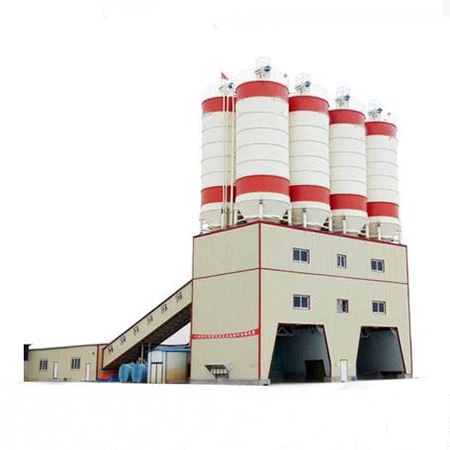
There are different types of cement available, such as Portland cement, which is the most commonly used type. Portland cement comes in various grades, each with its own specific properties. For example, Type I Portland cement is used for general construction purposes, while Type III is high-early-strength cement, which is great for projects that need to set quickly.
Aggregates
Aggregates are another crucial component of dry mix concrete. They are basically granular materials like sand, gravel, and crushed stone. Aggregates make up the bulk of the concrete and provide strength and stability.
Sand is a fine aggregate, and it fills the voids between the larger aggregates. It also helps to improve the workability of the concrete, making it easier to mix and place. Gravel and crushed stone are coarse aggregates, and they give the concrete its strength. The size and shape of the aggregates can affect the properties of the concrete. For example, well-graded aggregates with a good mix of different sizes can result in a more dense and strong concrete.
Water
Water is essential for the hydration process of cement. It activates the cement and allows it to harden. The amount of water used in dry mix concrete is carefully controlled because too much water can weaken the concrete, while too little water can prevent the cement from fully hydrating.
The water used in dry mix concrete should be clean and free from impurities. Impurities like salts, oils, and chemicals can affect the setting time and strength of the concrete. In some cases, additives may be used to improve the water - cement ratio and the overall performance of the concrete.
Additives
Additives are substances added to the dry mix concrete in small amounts to modify its properties. There are several types of additives, and each has a specific function.
One common type of additive is a plasticizer. Plasticizers increase the workability of the concrete without increasing the water content. This means you can have a more fluid concrete that's easier to pour and shape, while still maintaining its strength.
Another type of additive is an accelerator. Accelerators speed up the setting time of the concrete, which is useful for projects where a quick turnaround is needed. On the other hand, retarders slow down the setting time, which can be beneficial in hot weather or for large - scale projects where you need more time to place and finish the concrete.
Air - entraining agents are also important additives. They introduce tiny air bubbles into the concrete, which improves its resistance to freeze - thaw cycles. This is especially important in cold climates where the concrete is exposed to freezing and thawing conditions.
Fly Ash and Slag
Fly ash and slag are supplementary cementitious materials (SCMs) that can be used in dry mix concrete. Fly ash is a by - product of coal - fired power plants, and slag is a by - product of the iron and steel industry.
Using fly ash and slag in dry mix concrete has several benefits. They can replace a portion of the cement, which reduces the cost of the concrete and also makes it more environmentally friendly. Fly ash and slag can also improve the workability, durability, and long - term strength of the concrete.
How These Materials Work Together
In a dry mix concrete plant, all these materials are carefully measured and mixed together to create a homogeneous dry mixture. The dry mix can then be transported to the construction site and mixed with water on - site. This has several advantages, such as reducing the risk of segregation during transportation and allowing for more flexibility in the mixing process.
If you're interested in an On Site Concrete Batching Plant, it can be a great option for producing dry mix concrete right at the construction site. This eliminates the need for long - distance transportation of wet concrete and ensures that the concrete is fresh and of high quality.
For those who need a more flexible solution, a Mobile Concrete Batch Plant For Sale might be the way to go. Mobile batch plants can be easily moved from one site to another, which is ideal for contractors who work on multiple projects.
And if you're looking for high - quality concrete plants from a well - known industry, check out Aggregate Industries Concrete Plants. They offer a wide range of options to meet different needs.
Conclusion
Understanding the materials used in a dry mix concrete plant is essential for anyone involved in the construction industry. By using the right combination of cement, aggregates, water, additives, and supplementary cementitious materials, you can produce high - quality dry mix concrete that meets the specific requirements of your project.
If you're in the market for a dry mix concrete plant or have any questions about the materials used in dry mix concrete, don't hesitate to reach out. We're here to help you find the best solutions for your construction needs. Whether you're a small contractor or a large construction company, we've got the expertise and products to support you. So, let's start a conversation and see how we can work together to make your projects a success!
References
- Neville, A. M. (1995). Properties of Concrete. Pearson Education.
- Mehta, P. K., & Monteiro, P. J. M. (2014). Concrete: Microstructure, Properties, and Materials. McGraw - Hill Education.


