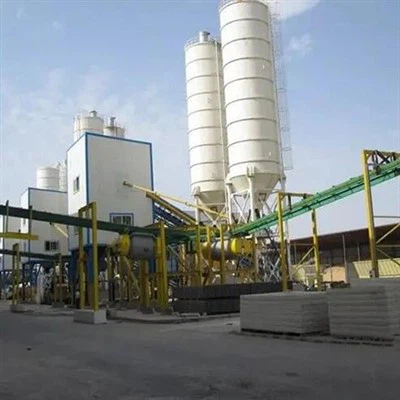
Hey there! I'm a supplier of Batching Plant Silos, and today I wanna chat about the role of a batching plant silo's anti-static device.
First off, let's understand what a batching plant silo is. It's a crucial part of a concrete production setup. You might have heard of different types of batching plants, like the Central Mix Concrete Plant and the Sicoma Batching Plant. These plants rely on silos to store materials like cement, fly ash, and other aggregates. And that's where the anti-static device comes into play.
So, what exactly is static electricity? Static electricity is the build-up of electric charge on the surface of an object. In a batching plant silo, static electricity can be generated in several ways. When materials are being transferred into the silo, like when cement is being pumped in, friction occurs between the particles and the silo walls or the conveying equipment. This friction can cause electrons to be transferred, leading to a build-up of static charge.
Now, you might be thinking, "So what? A little static charge can't be that bad, right?" Well, you'd be wrong. Static electricity in a batching plant silo can pose some serious risks. One of the biggest risks is the potential for explosions. Cement and other powders stored in the silo are often combustible. When static electricity builds up, it can create sparks. If these sparks come into contact with the combustible dust in the silo, it can lead to an explosion. This is not only dangerous for the workers in the plant but can also cause significant damage to the equipment and the entire production facility.
Another problem caused by static electricity is material flow issues. Static charge can cause the powder particles to stick together or to the silo walls. This can lead to blockages in the silo, preventing the smooth flow of materials. When the material flow is disrupted, it can slow down the production process, leading to delays and increased costs. For example, if the cement can't flow properly from the silo to the Concrete Batcher, the concrete mixing process will be affected, and the quality of the concrete might suffer.
So, that's where the anti-static device comes in. Its main role is to prevent the build-up of static electricity in the batching plant silo. There are different types of anti-static devices available, and each works in a slightly different way.
One common type of anti-static device is the grounding system. This involves connecting the silo to the ground using a conductive material, like a copper wire. The idea behind grounding is to provide a path for the static charge to flow safely to the ground. When the silo is grounded, any static charge that builds up on the silo or the materials inside it can be quickly dissipated, reducing the risk of sparks and explosions.
Another type of anti-static device is the static eliminator. These devices use ionizing technology to neutralize the static charge. They generate a stream of ions, which are particles with a positive or negative charge. When these ions come into contact with the charged particles in the silo, they neutralize the charge, preventing it from building up. Static eliminators can be installed inside the silo or along the conveying equipment to ensure that the static charge is neutralized at multiple points in the system.
In addition to preventing explosions and improving material flow, anti-static devices can also help to extend the lifespan of the silo and the equipment. When static charge is reduced, there is less wear and tear on the silo walls and the conveying equipment. This is because the static charge can cause corrosion and damage to the metal surfaces over time. By using an anti-static device, you can protect the equipment and reduce the need for frequent repairs and replacements.
Now, as a Batching Plant Silo supplier, I know how important it is to have a reliable anti-static device installed in your silo. We offer a range of high-quality anti-static devices that are designed to meet the specific needs of different batching plants. Our devices are easy to install and maintain, and they are proven to be effective in preventing static electricity build-up.
If you're in the market for a new batching plant silo or you're looking to upgrade your existing anti-static system, I encourage you to get in touch with us. We can provide you with more information about our products and help you choose the right anti-static device for your needs. Don't take the risk of operating a batching plant silo without proper anti-static protection. Contact us today to start a conversation about how we can help you improve the safety and efficiency of your concrete production process.


References:
- "Industrial Static Electricity: Detection, Prevention, and Control" by David A. Crowder
- "Safety in Powder Handling and Processing" by the Institution of Chemical Engineers