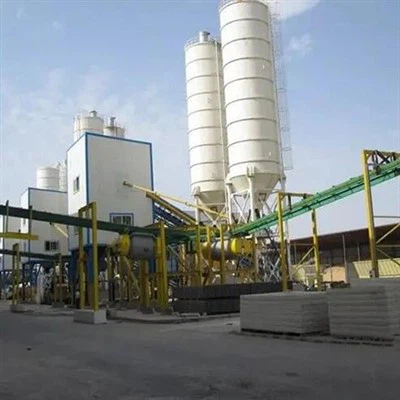
As a seasoned supplier in the ready mix cement plant industry, I've witnessed firsthand the diverse range of these plants that cater to various construction needs. Ready mix cement plants are essential in modern construction, providing a convenient and efficient way to produce concrete. In this blog, I'll explore the different types of ready mix cement plants, their features, and applications.
Transit Mixer Plants
Transit mixer plants are one of the most common types of ready mix cement plants. These plants are designed to mix concrete ingredients in a truck-mounted mixer during transit to the construction site. The mixing process starts at the plant and continues while the truck is on its way to the destination. This ensures that the concrete remains fresh and homogeneous until it reaches the site.
One of the key advantages of transit mixer plants is their flexibility. They can be easily transported to different construction sites, making them ideal for projects that require concrete to be delivered to multiple locations. Additionally, transit mixer plants can produce a large volume of concrete, which is suitable for large-scale construction projects such as high-rise buildings, bridges, and dams.
However, transit mixer plants also have some limitations. The mixing time is limited by the travel time to the construction site, which may affect the quality of the concrete if the distance is too long. Moreover, the capacity of the truck-mounted mixer is relatively small compared to other types of ready mix cement plants, which may not be sufficient for very large projects.
Central Mix Plants
Central mix plants, also known as stationary mix plants, are another popular type of ready mix cement plant. These plants are installed at a fixed location and are used to mix concrete ingredients before they are transported to the construction site. The concrete is usually transported in non-agitating trucks, which are designed to keep the concrete in a semi-fluid state during transit.
One of the main advantages of central mix plants is the high quality of the concrete they produce. Since the mixing process is carried out in a controlled environment at the plant, the quality of the concrete can be precisely monitored and adjusted. This results in a more consistent and uniform product, which is essential for high-quality construction projects.
Central mix plants also have a higher production capacity compared to transit mixer plants. They can produce a large volume of concrete in a short period of time, making them suitable for large-scale construction projects. Additionally, these plants can be equipped with advanced technology and automation systems, which improve the efficiency and productivity of the mixing process.
However, central mix plants require a significant investment in infrastructure and equipment. They need a large area of land for installation and a reliable supply of raw materials. Moreover, the transportation of the concrete from the plant to the construction site may increase the cost and time of the project, especially if the distance is long.
Pan Mixer Batching Plant
Pan mixer batching plants are a type of ready mix cement plant that uses a pan mixer to mix the concrete ingredients. The pan mixer consists of a circular pan with a rotating blade or blades that mix the materials inside the pan. This type of mixer is known for its high mixing efficiency and uniform mixing quality.
Pan mixer batching plants are suitable for small to medium-sized construction projects. They are relatively compact and easy to install, which makes them a popular choice for contractors who need a portable and cost-effective solution. These plants can be equipped with different types of batching systems, such as volumetric batching or weigh batching, depending on the specific requirements of the project.
One of the advantages of pan mixer batching plants is their versatility. They can be used to produce different types of concrete, including ordinary concrete, high-strength concrete, and lightweight concrete. Moreover, the pan mixer can be easily cleaned and maintained, which reduces the downtime and operating costs of the plant.


However, pan mixer batching plants have a relatively low production capacity compared to other types of ready mix cement plants. They may not be suitable for very large projects that require a high volume of concrete in a short period of time.
Mini Concrete Batch Plant
Mini concrete batch plants are designed for small-scale construction projects or for use in remote areas where space and resources are limited. These plants are compact and easy to transport, which makes them ideal for contractors who need a portable and affordable solution.
Mini concrete batch plants typically have a lower production capacity compared to larger plants, but they can still produce a sufficient amount of concrete for small projects such as residential buildings, small commercial buildings, and road repairs. They are usually equipped with a simple batching system and a small mixer, which makes them easy to operate and maintain.
One of the advantages of mini concrete batch plants is their cost-effectiveness. They require a lower initial investment and have lower operating costs compared to larger plants. Moreover, they can be easily customized to meet the specific requirements of the project, which makes them a flexible solution for different types of construction applications.
However, mini concrete batch plants may not be suitable for very large projects or for projects that require a high quality of concrete. The limited capacity and simple design of these plants may affect the production efficiency and the quality of the concrete.
Precast Concrete Batch Plant
Precast concrete batch plants are specialized ready mix cement plants that are used to produce precast concrete products. Precast concrete is a type of concrete that is cast in a factory or a precast yard and then transported to the construction site for installation. This type of concrete is widely used in the construction industry for various applications, such as building components, bridges, and infrastructure.
Precast concrete batch plants are designed to produce high-quality concrete with precise control over the mix design and the production process. They are usually equipped with advanced technology and automation systems, which ensure the consistency and uniformity of the precast concrete products. These plants can produce a large volume of concrete in a short period of time, which is essential for meeting the high demand of the precast concrete industry.
One of the advantages of precast concrete batch plants is the high quality and durability of the precast concrete products they produce. Since the concrete is cast in a controlled environment at the factory, the quality of the products can be precisely monitored and adjusted. This results in a more consistent and uniform product, which has better performance and longer service life compared to on-site cast concrete.
Moreover, precast concrete batch plants can reduce the construction time and cost of the project. The precast concrete products can be produced in advance and stored at the factory until they are needed at the construction site. This reduces the on-site construction time and labor costs, and also minimizes the impact of weather conditions on the construction process.
However, precast concrete batch plants require a significant investment in infrastructure and equipment. They need a large area of land for installation and a reliable supply of raw materials. Moreover, the transportation of the precast concrete products from the factory to the construction site may increase the cost and time of the project, especially if the distance is long.
Conclusion
In conclusion, there are several different types of ready mix cement plants, each with its own features, advantages, and limitations. The choice of the plant depends on various factors, such as the size and type of the construction project, the quality requirements of the concrete, the location of the project, and the budget of the contractor.
As a supplier of ready mix cement plants, I understand the importance of providing the right solution for each customer. Whether you need a transit mixer plant for a small project, a central mix plant for a large-scale construction project, or a specialized precast concrete batch plant for the precast concrete industry, I can offer you a wide range of options to meet your specific needs.
If you are interested in purchasing a ready mix cement plant or have any questions about our products, please feel free to contact me for a detailed consultation. I will be happy to assist you in choosing the right plant for your project and provide you with the best possible service.
References
- Neville, A. M. (2011). Properties of Concrete. Pearson Education.
- ACI Committee 211. (2014). Standard Practice for Selecting Proportions for Normal, Heavyweight, and Mass Concrete. American Concrete Institute.
- PCA (Portland Cement Association). (2018). Design and Control of Concrete Mixtures. Portland Cement Association.