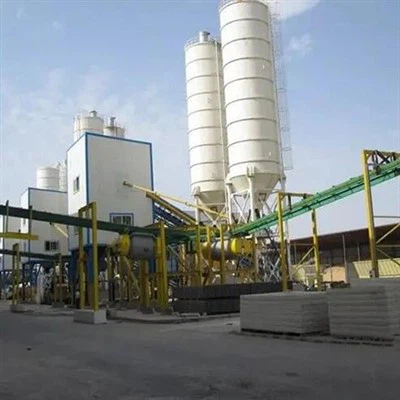
Can a concrete mixing plant produce different grades of concrete? You bet it can! As a supplier of concrete mixing plants, I've seen firsthand how these versatile machines can churn out a wide range of concrete grades to meet various construction needs.
Let's start by understanding what we mean by "grades of concrete." Concrete grades are classified based on their compressive strength, which is measured in megapascals (MPa). The higher the MPa, the stronger the concrete. Common grades include C10, C15, C20, C25, C30, and so on, with each grade suitable for different applications. For example, C10 might be used for non - structural elements like sidewalks, while C30 and above are often used for building foundations and high - rise structures.
So, how does a concrete mixing plant achieve the production of different grades? Well, it all boils down to the precise control of its ingredients. The main components of concrete are cement, aggregates (like sand and gravel), water, and sometimes admixtures.
First off, cement is the binding agent in concrete. Different grades of concrete require different amounts of cement. For stronger grades, more cement is added because it forms a stronger matrix when it hardens. Our Concrete Plant Equipment is equipped with advanced weighing systems that can accurately measure the amount of cement going into the mix. This ensures that the right proportion is used for each specific grade.
Aggregates also play a crucial role. The size, shape, and quality of aggregates can affect the strength and workability of concrete. For high - strength grades, well - graded aggregates with a proper mix of different sizes are used. Our plants can handle different types of aggregates and can adjust the quantity based on the grade requirements. We have crushers and screening machines that can process aggregates to the desired specifications, ensuring a consistent and high - quality mix.
Water is another key ingredient. The water - to - cement ratio is a critical factor in determining the strength of concrete. A lower water - to - cement ratio generally results in stronger concrete. Our mixing plants have water meters that can precisely control the amount of water added to the mix. This allows us to achieve the optimal water - to - cement ratio for each grade of concrete.


Admixtures are often used to modify the properties of concrete. They can improve workability, reduce setting time, or increase durability. Depending on the grade and application, different admixtures are added in specific quantities. Our plants are designed to accurately measure and incorporate these admixtures into the concrete mix.
Now, let's talk about the types of concrete mixing plants we offer. We have Stationary Concrete Plant and Wet Mix Concrete Plant.
Stationary concrete plants are ideal for large - scale construction projects where a continuous supply of concrete is required. These plants are set up at a fixed location and can produce high volumes of concrete. They are highly customizable and can be configured to produce different grades of concrete with ease. The batching systems in our stationary plants are designed to handle multiple ingredients simultaneously, allowing for quick and efficient production of various concrete grades.
Wet mix concrete plants, on the other hand, are great for projects where the concrete needs to be transported over longer distances. In a wet mix plant, all the ingredients are mixed thoroughly before being transported to the construction site. This ensures a homogeneous mix and consistent quality. Our wet mix plants can also be adjusted to produce different grades of concrete, depending on the project requirements.
One of the advantages of our concrete mixing plants is their flexibility. They can be easily programmed to produce different grades of concrete. With the touch of a button on the control panel, operators can change the mix proportions and start producing a different grade. This is extremely useful for construction projects that require multiple grades of concrete at different stages.
Another benefit is the quality control. Our plants are equipped with sensors and monitoring systems that constantly check the quality of the concrete mix. These systems can detect any deviations from the desired mix proportions and make automatic adjustments. This ensures that every batch of concrete, regardless of the grade, meets the highest quality standards.
In addition, our plants are designed for efficiency. They have high - speed mixers that can quickly blend the ingredients, reducing the production time. This means that we can produce large quantities of different grades of concrete in a short period, which is essential for meeting tight construction schedules.
We also provide excellent after - sales service. Our team of experts is always available to help customers with any technical issues or questions they may have. We offer training programs for operators to ensure that they can operate the plants effectively and produce high - quality concrete.
If you're in the construction industry and need a reliable source of different grades of concrete, look no further. Our concrete mixing plants are the perfect solution. Whether you're building a small residential project or a large commercial complex, we can provide you with the right equipment to produce the concrete grades you need.
So, if you're interested in purchasing a concrete mixing plant or have any questions about our products, don't hesitate to get in touch. We're here to assist you in finding the best solution for your construction needs. Contact us today to start a discussion about your project and how our concrete mixing plants can help you achieve your goals.
References
- "Concrete Technology" by A.M. Neville
- "Design and Control of Concrete Mixtures" by Portland Cement Association