

In the construction industry, efficiency of operations and quality of the finished product are of utmost importance. Concrete batching plants play a key role in this process, mixing various materials together to produce high-quality concrete.
Key Points
- Concrete batching plants are key to modern construction, with a wide range of options available to meet the needs of different projects.
- Technological advancements are increasingly changing the face of concrete plants.
- Choosing the right type of concrete plant requires consideration of project specifics, capacity requirements, and location logistics.
This article explores the different types of concrete batching plants. Our goal is to guide potential buyers and industry professionals in making an informed decision.
What is a batching plant
These plants are advanced facilities that precisely mix raw materials such as cement, aggregates (sand, gravel, and rock), and water to make concrete.
These plants ensure that concrete is produced under controlled conditions, thereby guaranteeing a consistent quality of concrete that meets specific project standards and requirements.
Types of Concrete Batching Plants
Concrete batching plants come in a variety of types to meet the different needs of the construction industry. Below we have listed some of the most popular and useful types of batching plants that facilitate concrete batching. Let's get started:
Stationary Mixing Plants
Stationary concrete batching plants are the backbone of large construction projects. They are favored for their stability and high output capacity, and are ideal for long-term projects with high concrete demand. These plants are equipped with powerful mixing systems and have a capacity ranging from 25 cubic meters per hour to up to 200 cubic meters per hour.
Mobile Batching Plants
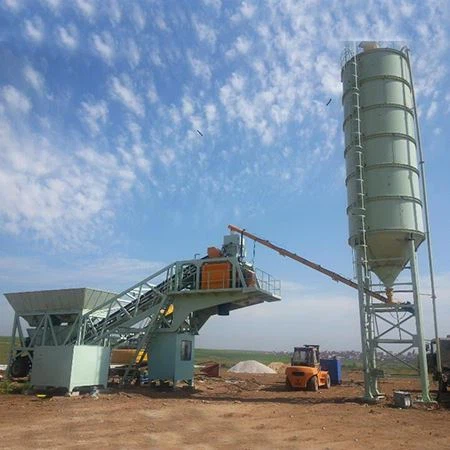
Mobile concrete batching plants are the preferred solution for projects that require a flexible approach. These plants are mounted on a wheeled chassis and can be easily moved across sites or between different construction sites. They are very useful for projects such as highway construction, where the batching plant must be relocated frequently as road works progress.
Compact Batching Plants
Compact plants meet the needs of smaller, space-constrained projects. They strike a balance between the mobility of mobile equipment and the ruggedness of fixed equipment. Although they have a smaller footprint, their output is still sufficient to meet the needs of urban construction projects.
Transportable Concrete Batching Plants (Dry Mix Plants)
Transportable concrete batching plants, also known as dry batching plants, prepare concrete by mixing all the necessary dry ingredients. Water is added to the concrete only when it is transported to the construction site. This approach is particularly useful for projects where the plant is a long way from the construction site.
Central Mixing Plant (Wet Mix Plant)
As opposed to a transportable concrete batching plant, a central concrete batching plant (or wet mix plant) brings all ingredients, including water, to the batching plant. This approach allows for better control over the consistency of the mix and is suitable for high-specification projects where the precise formulation of the concrete is critical.
Choosing the Right Batching Plant
Selecting the right type of plant involves considering a variety of factors:
- Project Scope: Analyze the size and duration of the project to match the plant's capabilities with the project's needs.
- Output Requirements: Evaluate the amount of concrete required on a daily, weekly, or monthly basis to select a plant that can meet those needs without excessive downtime.
- Site Constraints: Consider the geographic and spatial constraints of the construction site. Urban areas may require a compact plant, while rural areas may require a stationary plant.
- Budget Constraints: Consider initial purchase costs, operating costs, and maintenance expenses. If multiple sites are involved, a mobile plant may be cost-saving.
Technological Advances
Modern plants have cutting-edge technology that improves operational efficiency and accuracy. Automated systems control the batching and mixing of materials, ensuring precise mix design and quality control.
Many plants are now also equipped with software that allows for remote monitoring and management, providing data-driven insights into plant performance. Here are some of the other technological advances in these systems:
- Advanced sensors and control systems: These plants use a variety of sensors to measure the moisture content, temperature, and other critical parameters of materials. This real-time data helps adjust the mix and maintain consistency throughout the production process.
- Integrated supply chain management: Modern plants integrate supply chain management tools into their operations. This integration helps streamline the procurement and scheduling of raw materials, ensuring that production is not stopped due to shortages.
- Environmental control: Advanced environmental control systems are now part of modern plants. These systems help manage dust emissions, recycle water, and reduce overall environmental impact.
- Artificial intelligence and machine learning: Artificial intelligence and machine learning are increasingly being used to predict maintenance issues, optimize operations, and reduce downtime. These technologies can analyze historical data and predict trends that can help with proactive maintenance.
- Mobile and cloud solutions: With the advent of mobile and cloud technologies, plant managers can now access control systems from anywhere using a smartphone or tablet. This flexibility improves decision-making and reduces the time to respond to any operational challenge.
By adopting these technological advances, concrete plants have improved their operational efficiency and contributed to sustainable building practices.


