

Concrete batching plant
Concrete mixing equipment mixes various components into concrete. These materials include water, air, aggregates, cement, and fly ash. It consists of various components and machine mixing devices, conveyors, aggregate and cement batching machines, cement silos, etc. A concrete batching plant is a machine that evenly mixes concrete components to obtain the required strength and quality. These devices can be used in damp or dry conditions and come in various configurations and production types, including pre mixing, prefabrication and prestressing, central mixing, and roller compacted concrete.
Market Trends of Concrete batching Plants
In terms of value, the batching plant industry is one of the largest industries in the Indian concrete equipment market. The growth of this segmented market is due to customers increasingly liking ingredient factories with large production capacity and advanced technology. The continuous increase in the number of construction projects, the shortening of completion times, and the demand for customized solutions from end users have further driven the growth of this field.
High rise buildings are one of the areas with great potential for mixing plants. High quality concrete is crucial for sturdy high-rise buildings. The concrete mixing plant should have the latest and advanced technological features, and manufacturers are investing in this. Currently, the energy consumption of these factories is nearly 15% lower than other factories, and the R&D team is focusing on how to further reduce energy consumption. The use of modern control systems further controls the downtime of machines. The company now provides additional services, such as storing spare parts at distributors for immediate delivery; Provide customers with faster spare parts transportation and track dealer and customer spare parts inventory.
Advantages of concrete batching plants
Preparing pre mixed concrete at the construction site is a time-consuming process. You can eliminate construction costs by using a mixing plant in the project. Each type of concrete is produced on-site. When we use a concrete mixing plant, production and delivery can be completed in just a few minutes. Adjust concrete production according to requirements and fully utilize concrete production. The concrete batching plant provides the following benefits for construction personnel:
The use of stable raw material mixing, advanced production technology, microcomputer control, accurate measurement, complete testing methods, stable and reliable quality, and high strength greatly improves the construction quality level of buildings (structures).
The construction unit adopts a commodity batching plant to improve construction speed and reduce turnover and rental costs of equipment, brackets, pipelines, templates, etc; The owner unit can shorten the construction period and reduce investment risks.
Due to the stable and reliable quality of the commodity mixing station, the design unit can avoid "fertilizer beams", "fertilizer columns", and "thick plates" based on the design of the batching plant.
The use of mineral active admixtures and admixtures such as slag and fly ash in the batching plant can greatly improve the long-term performance of concrete, such as waterproofing, frost resistance, crack resistance, and wear resistance, and can extend the service life of buildings.
Improve construction organization, reduce labor intensity, reduce construction management costs, technical difficulties, and quality risks.
The main purpose of using this equipment is to produce uniform concrete. The factory must continuously produce the same proportion of concrete, batch after batch. Depending on the mixer and location, different types of batching devices are available, and the characteristics and applications of each component are described below.
Different types of concrete batching plants
Concrete batching plant based on location
Mobile concrete batching plant

Modern mobile devices are equipped with a stable main frame, which can minimize the vibration of the scale, achieve extremely high durability, safe transportation, continuous long life operation, and sensitive weighing. All equipment required for the operation of the mixing plant is installed on the main frame and transported on the main frame. The main box is pre installed with a water buffer tank, water pump, additive tank, additive pump, and air compressor. All devices have been pre wired and tested. A concrete factory is equipped with 2 complete sets of screw conveyors, filters, and other silo equipment, which can be transported by just one trailer. The mobile concrete batching plant is pre wired and equipped with the most equipment to ensure fast on-site installation. Typically, standard mobile devices can be installed within 1-2 days.
Fixed concrete batching plant
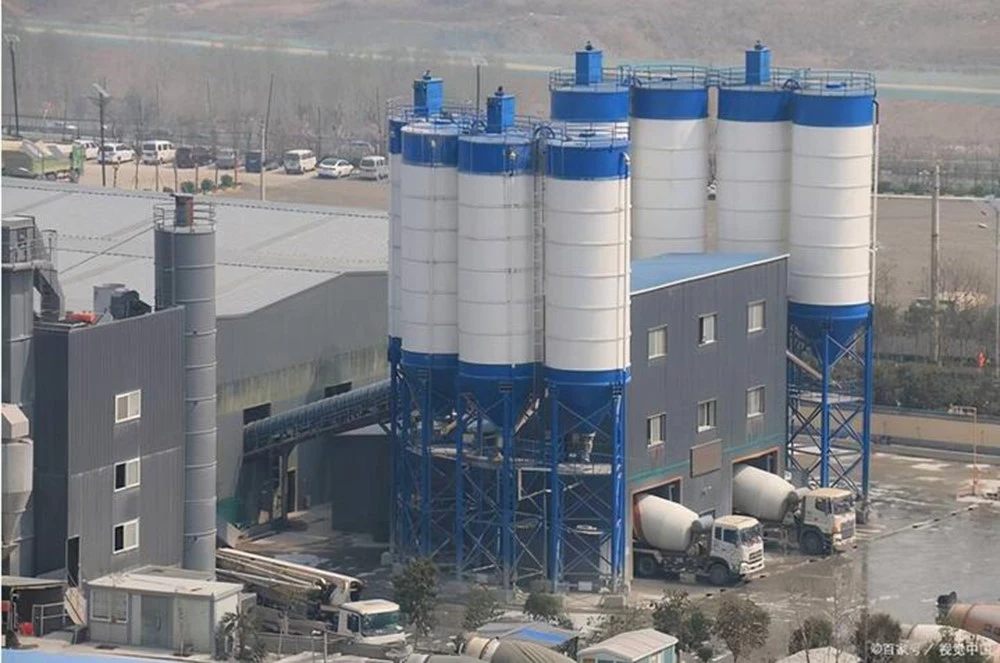
Fixed batching plants are usually composed of large double shaft mixers, aimed at producing various large-scale and high-quality concrete with maximum capacity, efficiency, and reliability. Fixed concrete production equipment aims to provide maximum rated production capacity and longer working hours. The new model is mainly equipped with a dual shaft mixer to achieve maximum production capacity. The equipment is also equipped with a planetary mixer and can modify batch size. Fixed equipment has various production capacities, capable of producing 30 to 300 cubic meters of compacted concrete per hour. In the current fixed concrete factory, aggregates are stored in horizontal boxes. The aggregate conveyor belt runs below the silo, where the aggregate is weighed and then unloaded onto the loading conveyor. Pneumatic doors are used to discharge aggregates onto the aggregate conveyor. All materials are accurately weighed and transferred to a dual shaft mixer through a throwing conveyor. The new model can easily use silica ingredients and some special additives. The new batching plant is also equipped with hopper elevators and belt layout options for mixer loading. The new model can easily use silica ingredients and some special additives.
Transportation/Dry Mix Concrete batching Plant
If it is far from the construction site, a dry concrete batching plant is the ideal choice for manufacturers. On the way to the construction site, the drum of the mixing truck can maintain rotation to prevent the concrete from hardening after mixing and ensure the freshness of the materials. The dry concrete batching plant feeds sand, gravel, and cement into the mixing station through digital or manual scales. The modern dry mixed concrete mixing station consists of a cement silo, a feeding system, a control system, a weighing system, and a mixing system. Cement silo is a container for storing and supplying raw materials such as cement, sand, fly ash, etc. according to production needs. The feeding system is a bridge connecting the aggregate and mixing system. The accuracy of the weighing system determines the quantity of mixed materials, thus having a significant impact on the quality of mixed concrete. The mixing system only mixes the materials without adding water. Therefore, mixer trucks are very important for the transportation and mixing of concrete. The control system is the core of the entire device. Workers operate concrete equipment in the control room to achieve full automation.
Wet mixed concrete batching plant
The wet mixed concrete batching plant has mobility, making it easy to transport and install. Wet mixed concrete mixing stations can be divided into two types: fixed wet mixed concrete mixing stations and mobile wet mixed concrete mixing stations. If you have many construction projects to complete and are far away, you can invest in several small fixed wet mixing plants. Otherwise, you can choose a large mobile wet mixing equipment. When you complete this project, you can dismantle the equipment and transport it to another project site. The latest model adopts a dual shaft paddle mixer, which has strong mixing quality. This can ensure that there is no or almost no residue inside the double horizontal axis concrete mixer, saving materials and costs. Using a central mixing device, all loads will see the same mixing action, and there will be an initial quality control point when unloading from the central mixer.


