

The metering system includes aggregate metering and powder (cement and admixtures), water, and liquid admixtures metering.
The metering system is one of the key components of the mixing equipment. Measurement methods are usually based on mass measurement, and there are also cases where volume measurement is used (but should be converted to the given or indicated mass). Currently, volume measurement is not used for materials other than water and additives.
According to GB/T10171-2005 "Concrete Mixing Plant (Building)", the weighing accuracy of various materials is shown in the table below:
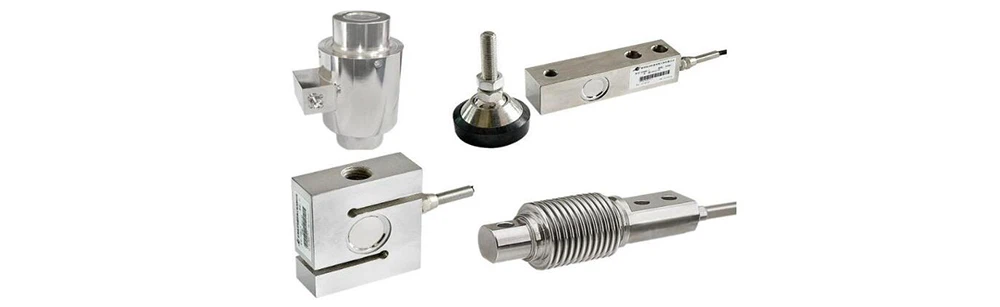
At present, Jinheng Mixing Station adopts a centralized weighing system, where each scale is connected to the measuring bucket by one or more sensors, and then centralized to the control console for unified processing through a transmission device. The technical performance has become mature, and it is widely promoted and used due to its small size, fast response, high sensitivity, and easy compatibility with microprocessors, achieving various functions such as coarse weighing, fine weighing, and multiple deduction and less compensation.
According to the specific force transmission method and mechanical structure of the scale, different sensors can be selected, commonly used being pressure or tension. According to the structural characteristics of sensors, they can be divided into different structural forms such as cylindrical, cylindrical, S-shaped, corrugated pipes, cantilever beams, and so on. With the development of sensor technology, it has the characteristics of simple structure, small space occupation, and high accuracy. When used, necessary protective measures should be taken in terms of shockproof, moisture-proof, dustproof, and anti-interference.
Aggregate measurement
There are two measurement methods for aggregate measurement: cumulative measurement and independent measurement.
The cumulative measurement device for aggregates consists of a bucket body, a sensor, a belt conveyor, etc. The bucket body is connected to the belt conveyor as a whole. After all aggregates are measured, the belt conveyor starts running and sends all aggregates into the lifting device (lifting bucket, inclined belt conveyor).
The separate measuring device for aggregates consists of a measuring hopper body, a hopper door, a sensor, a cylinder, etc. Before the start of measurement, the hopper door is closed. At the beginning of measurement, the two hopper doors of the aggregate bin are opened. When the weight value of the aggregate reaches a certain set value, one of the hopper doors of the aggregate bin is closed for precise measurement of the aggregate. When the weight of the aggregate reaches the set weighing value, all the hopper doors are closed to complete the weighing process. After receiving the signal to open the door, the piston rod acts and the door opens, starting unloading. After the scale is empty (the signal measured by the sensor is zero), the piston rod action is delayed and the door is closed.
Aggregate measurement
There are two measurement methods for aggregate measurement: cumulative measurement and independent measurement.
The cumulative measurement device for aggregates consists of a bucket body, a sensor, a belt conveyor, etc. The bucket body is connected to the belt conveyor as a whole. After all aggregates are measured, the belt conveyor starts running and sends all aggregates into the lifting device (lifting bucket, inclined belt conveyor).
The separate measuring device for aggregates consists of a measuring hopper body, a hopper door, a sensor, a cylinder, etc. Before the start of measurement, the hopper door is closed. At the beginning of measurement, the two hopper doors of the aggregate bin are opened. When the weight value of the aggregate reaches a certain set value, one of the hopper doors of the aggregate bin is closed for precise measurement of the aggregate. When the weight of the aggregate reaches the set weighing value, all the hopper doors are closed to complete the weighing process. After receiving the signal to open the door, the piston rod acts and the door opens, starting unloading. After the scale is empty (the signal measured by the sensor is zero), the piston rod action is delayed and the door is closed.
Water metering
At the beginning of water metering, the water pump receives a signal and starts to pump water from the pool to the water metering bucket. When the weight of the water reaches the pre-set weight value, the water pump stops working and completes the measurement. When the pneumatic discharge ball valve receives the discharge command, the pneumatic discharge ball valve acts and opens the door to discharge water. After the scale is empty, the pneumatic discharge butterfly valve will delay and close the discharge port.
The correct implementation of the designed water cement ratio is the key to ensuring the quality of concrete during the concrete preparation process. In order to accurately control the amount of water added to concrete, high-precision water measuring equipment alone is not enough, as the water contained in the sand and gravel will enter the mixer together with the sand and gravel. If the presence of this water is not considered, the designed water cement ratio cannot be accurately achieved. Only by measuring the moisture content of sand and gravel in advance and deducting it from the prepared water can the accuracy of the concrete mix ratio be guaranteed. If a sand and gravel moisture content tester is used, continuous measurement of sand and gravel moisture content can be achieved, thereby achieving automatic correction of water and sand consumption.


